
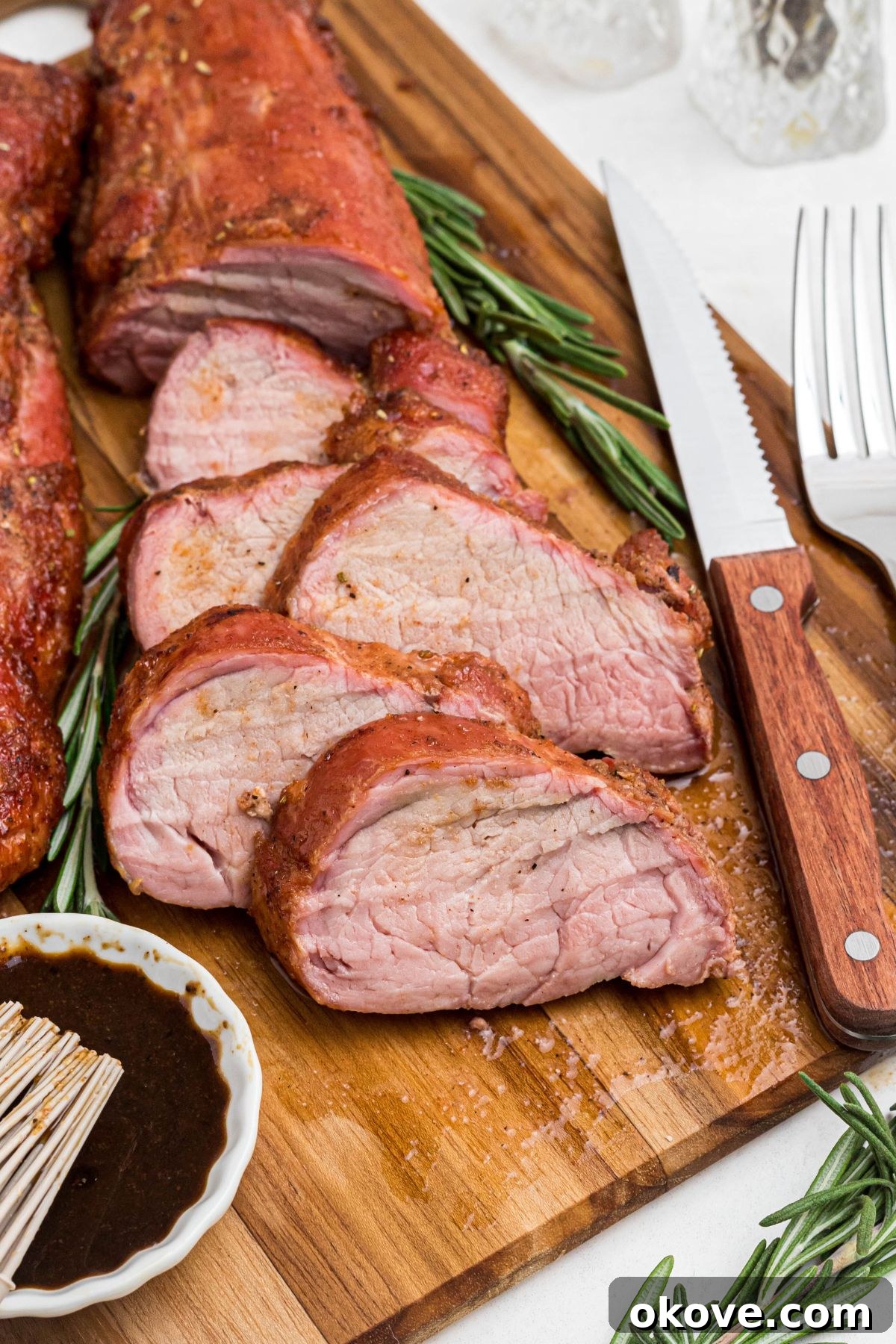
Ultimate Smoked Pork Tenderloin with Sweet & Tangy Glaze
Unlock the secrets to perfectly tender and incredibly juicy Smoked Pork Tenderloin that will impress at any gathering or elevate your weeknight dinner. This exceptional recipe simplifies the smoking process, ensuring a melt-in-your-mouth experience every time. The magic truly happens during the final stages, when a luscious sweet and tangy glaze is brushed onto the meat, creating a beautiful glossy finish and an exquisite balance of flavors that complement the rich smokiness.
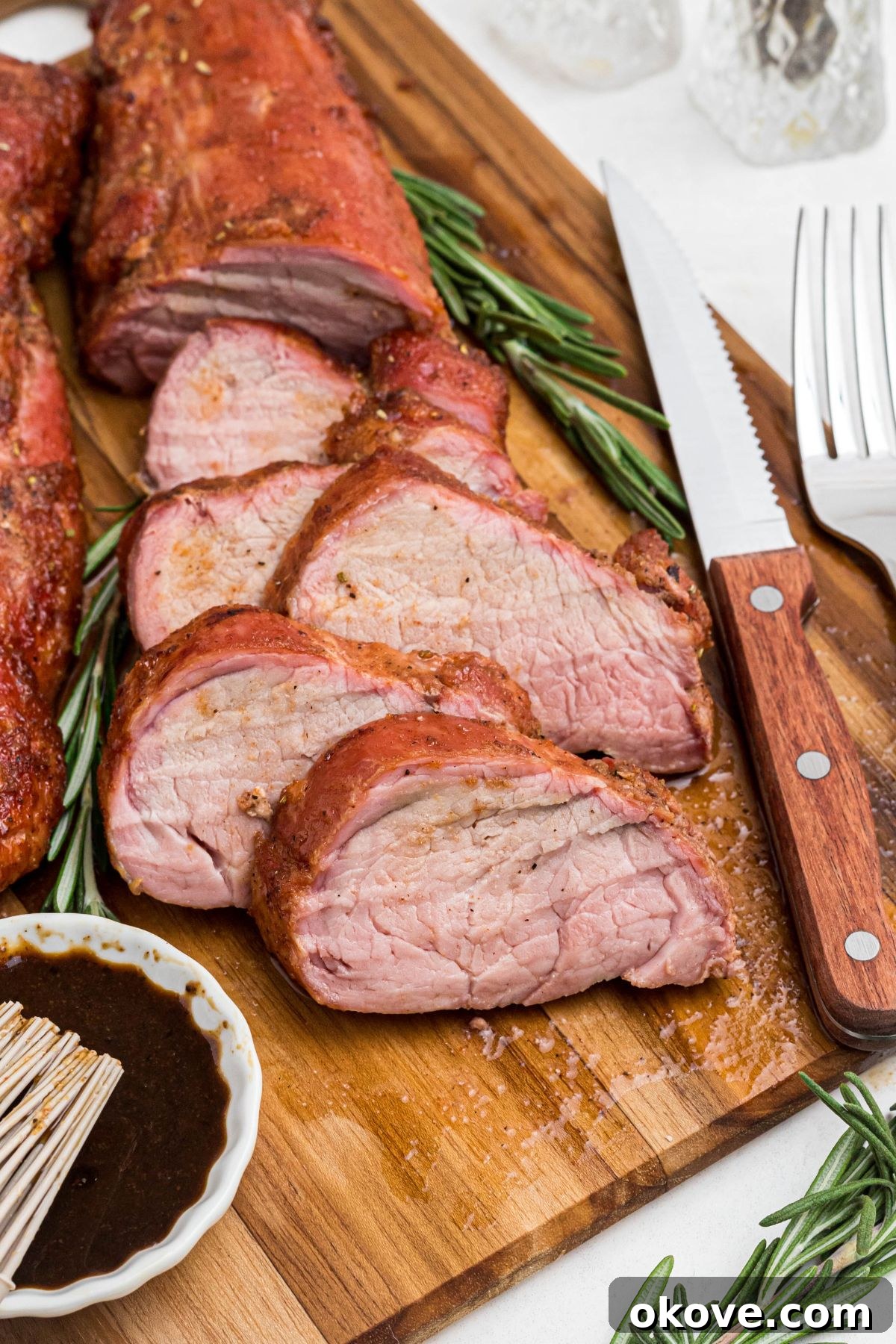
“Smoked tenderloin shows that low heat can turn a simple cut into pure, melt-in-your-mouth perfection.”
-Becky
Serving this tenderloin is a delight. Slice it into medallions and pair it with classic BBQ side dishes such as creamy baked beans, crisp coleslaw, or warm, buttery cornbread for a comforting, crowd-pleasing meal. Whether you’re hosting a vibrant summer cookout, a festive holiday gathering, or a cozy family dinner, this smoked pork tenderloin is destined to be the star of your table, drawing rave reviews from everyone who tastes it.
If you appreciate straightforward recipes that deliver outstanding flavor, you might also enjoy our creamy Smoked Mac and Cheese, irresistibly crispy Smoked Jalapeño Poppers, or our effortlessly delicious Slow Cooker BBQ Ribs. For a truly complete meal, consider adding these Homemade Dinner Rolls and a refreshing Ambrosia Salad.
Table of Contents
- Why Smoked Pork Tenderloin?
- Essential Ingredients for a Flavorful Smoked Pork Tenderloin
- Equipment You Will Need
- Flavor Variations and Serving Suggestions
- Step-by-Step Guide: How to Smoke Pork Tenderloin
- Expert Smoking Tips for Success
- Smoked Pork Tenderloin FAQs
- More Easy Dinner Recipes
- Smoked Pork Tenderloin Recipe Card
Why Smoked Pork Tenderloin?
Pork tenderloin is often celebrated for its lean profile and quick cooking time, making it an excellent choice for a variety of culinary applications. However, when you introduce it to the low and slow heat of a smoker, it transforms into something truly extraordinary. Smoking infuses the pork with a complex, aromatic depth that simply cannot be achieved through other cooking methods. Despite being a lean cut, the smoking process, when done correctly, keeps the tenderloin incredibly moist and tender, preventing it from drying out. The gentle heat allows the muscle fibers to relax, resulting in a buttery texture that slices beautifully and melts in your mouth. Furthermore, the ability to customize the smoke flavor with different wood types and enhance it with a delectable glaze makes smoked pork tenderloin a versatile and endlessly rewarding dish to prepare.
Essential Ingredients for a Flavorful Smoked Pork Tenderloin
Crafting the perfect smoked pork tenderloin begins with quality ingredients and a thoughtfully balanced rub and glaze. Each component plays a vital role in achieving that sought-after tender texture and irresistible flavor profile.
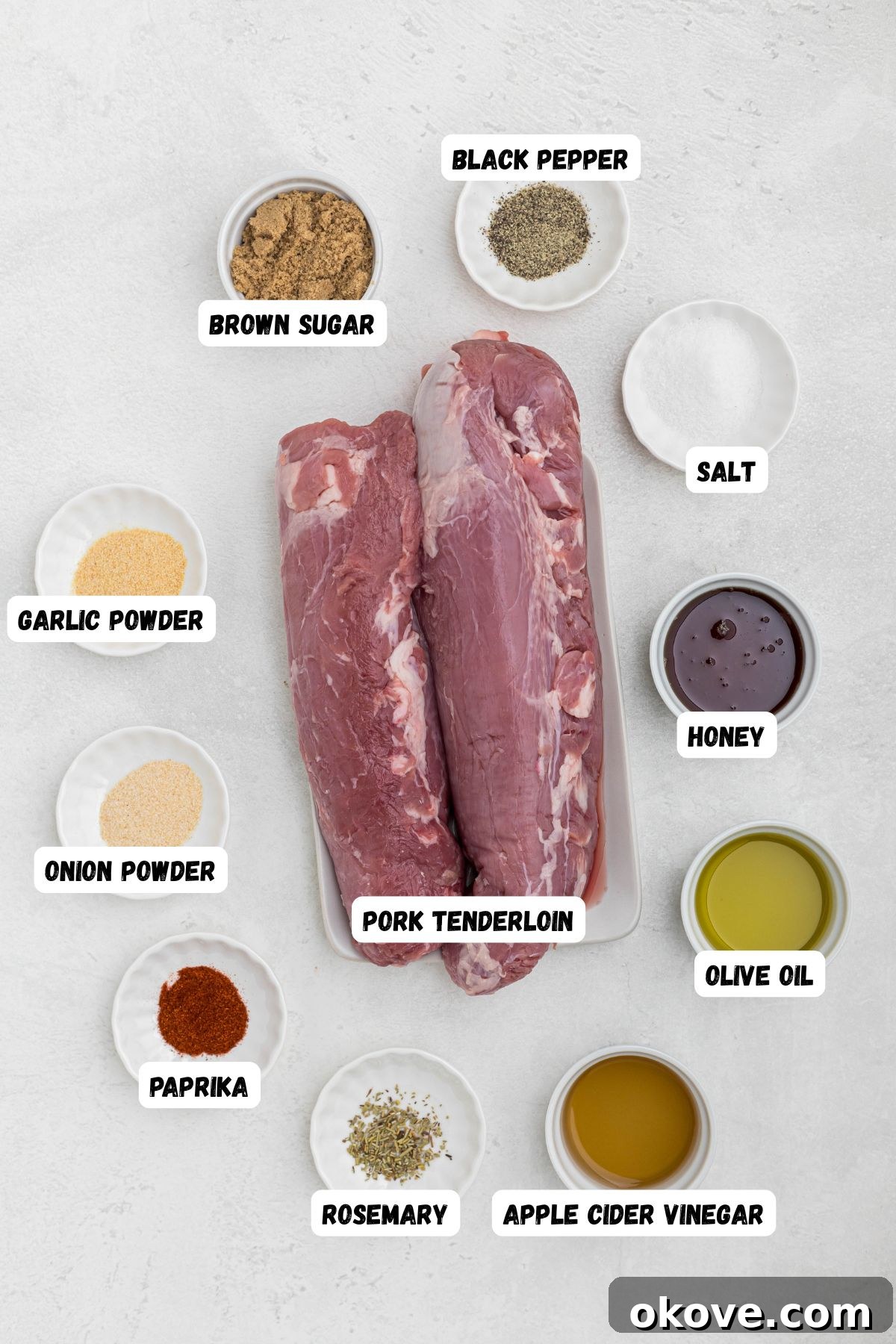
For the Pork and Rub:
- Pork Tenderloin: Opt for two pieces, typically ranging from 2-3 pounds each. Look for tenderloins that are pinkish-red, firm to the touch, and free of any strong odors. Properly trimming any silver skin is crucial for tenderness.
- Olive Oil: A light coating helps the dry rub adhere uniformly to the meat and can aid in moisture retention.
- Brown Sugar: This is a cornerstone of our rub, providing a beautiful sweetness that balances the savory spices. It also contributes to the formation of a delicious caramelized “bark” on the surface of the tenderloin.
- Kosher Salt: Essential for seasoning the meat from within, enhancing its natural flavors, and aiding in moisture retention through osmosis.
- Ground Black Pepper: Adds a subtle heat and aromatic complexity to the rub, providing a classic contrast.
- Garlic Powder: Delivers a deep, savory, and aromatic foundation, permeating the pork with its pungent, comforting notes.
- Onion Powder: Offers a subtle sweetness and umami depth that complements the garlic, rounding out the savory profile.
- Smoked Paprika: A personal favorite, smoked paprika not only imparts a beautiful reddish hue but also a fantastic, mild smokiness that layers wonderfully with the smoker’s wood chips. If unavailable, regular paprika can be used for color, but you’ll miss that extra smoky dimension.
- Dried Rosemary: This herb introduces an earthy, piney, and highly aromatic note that pairs exceptionally well with pork, elevating the overall fragrance and taste.
For the Glaze:
- Honey: The star of the glaze, honey provides a rich, floral sweetness and contributes to the glossy, slightly crisp exterior after broiling. It caramelizes beautifully.
- Apple Cider Vinegar: Crucial for balancing the sweetness of the honey. Its tangy, acidic notes cut through the richness of the pork and honey, creating a harmonious and vibrant flavor profile.
A full list of ingredients with precise measurements is conveniently included in the recipe card below.
Equipment You Will Need
To successfully execute this smoked pork tenderloin recipe, you’ll need a few key pieces of equipment. Having these on hand will ensure a smooth and enjoyable cooking experience:
- Smoker: The star of the show! Whether you use a pellet smoker (highly recommended for ease of use and consistent temperature control), an electric smoker, a charcoal smoker, or an offset smoker, ensure it’s clean and ready to go.
- Meat Thermometer: Absolutely essential for achieving the perfect doneness and preventing overcooking. An instant-read thermometer is ideal for quick checks, and a probe thermometer with a remote monitor can be incredibly helpful for monitoring the internal temperature throughout the smoking process without opening the smoker lid frequently.
- Small Bowl: For mixing your dry rub ingredients.
- Small Saucepan: For preparing the sweet and tangy glaze.
- Whisk or Spoon: For combining glaze ingredients.
- Basting Brush: To apply the glaze evenly onto the pork.
- Aluminum Foil-Lined Baking Sheet: For transferring the tenderloin after smoking and for the final broiling step, making cleanup a breeze.
- Sharp Knife: Crucial for trimming the silver skin and for slicing the cooked tenderloin against the grain.
- Cutting Board: A sturdy surface for preparation and carving.
- Paper Towels: For patting the pork dry before applying the rub.
Flavor Variations and Serving Suggestions
One of the joys of cooking is the ability to customize and experiment with flavors. Here are some fantastic ways to adapt this smoked pork tenderloin recipe and enhance your meal:
Flavor Variations:
- Apple Juice Spritz for Extra Moisture and Flavor: To further enhance moisture and introduce another layer of sweet apple flavor, lightly spritz the tenderloin with apple juice every 20-30 minutes during the smoking process. This creates a moist environment and helps the smoke adhere to the meat.
- Bolder Smoke Profile: While apple wood is recommended for a subtle sweetness, you can opt for a stronger smoke by using hickory wood or a blend of hickory and apple wood. Hickory provides a robust, bacon-like flavor that can be very appealing, but use it in moderation to avoid overpowering the delicate pork tenderloin. Other excellent choices include pecan (nutty, mild) or cherry (fruity, darker color).
- A Gentle Kick of Heat: For those who enjoy a touch of spice, add ¼ teaspoon of cayenne pepper to the dry rub. This introduces a gentle heat that beautifully complements the sweetness of the glaze without making the dish overly spicy. Adjust the amount to your personal preference.
- Herbaceous Twist: Experiment with different dried herbs in your rub. Thyme, sage, or a blend of Italian herbs can offer different aromatic profiles that pair wonderfully with pork.
- Mustard Binder: Instead of olive oil, try a thin layer of Dijon mustard as a binder for your rub. It adds a subtle tang and helps the rub adhere perfectly.
Serving with Sauce:
- Classic BBQ Sauce: While the honey-apple cider glaze is fantastic, serving the smoked tenderloin with your favorite store-bought or homemade BBQ sauce on the side can offer an additional layer of flavor and moisture. This allows guests to customize their experience.
- Tangy Dipping Sauce: Consider a unique dipping sauce, such as a cranberry-jalapeño relish, a spicy mango chutney, or a creamy horseradish sauce. These can add a vibrant contrast and elevate the dish for a more gourmet feel.
Perfect Pairings & Side Dishes:
The versatility of smoked pork tenderloin means it pairs well with a wide array of sides. Beyond the classics mentioned earlier, consider:
- Roasted Vegetables: Asparagus, Brussels sprouts, or a medley of root vegetables like carrots and potatoes roasted with herbs.
- Creamy Mashed Potatoes or Sweet Potato Casserole: Offer a comforting contrast to the savory pork.
- Green Bean Casserole or Fresh Salad: For a lighter, fresher accompaniment.
- Corn on the Cob: Especially in summer, a natural pairing.
- Apple Sauce or Chutney: A traditional and delicious accompaniment to pork, complementing the sweet glaze.
Step-by-Step Guide: How to Smoke Pork Tenderloin
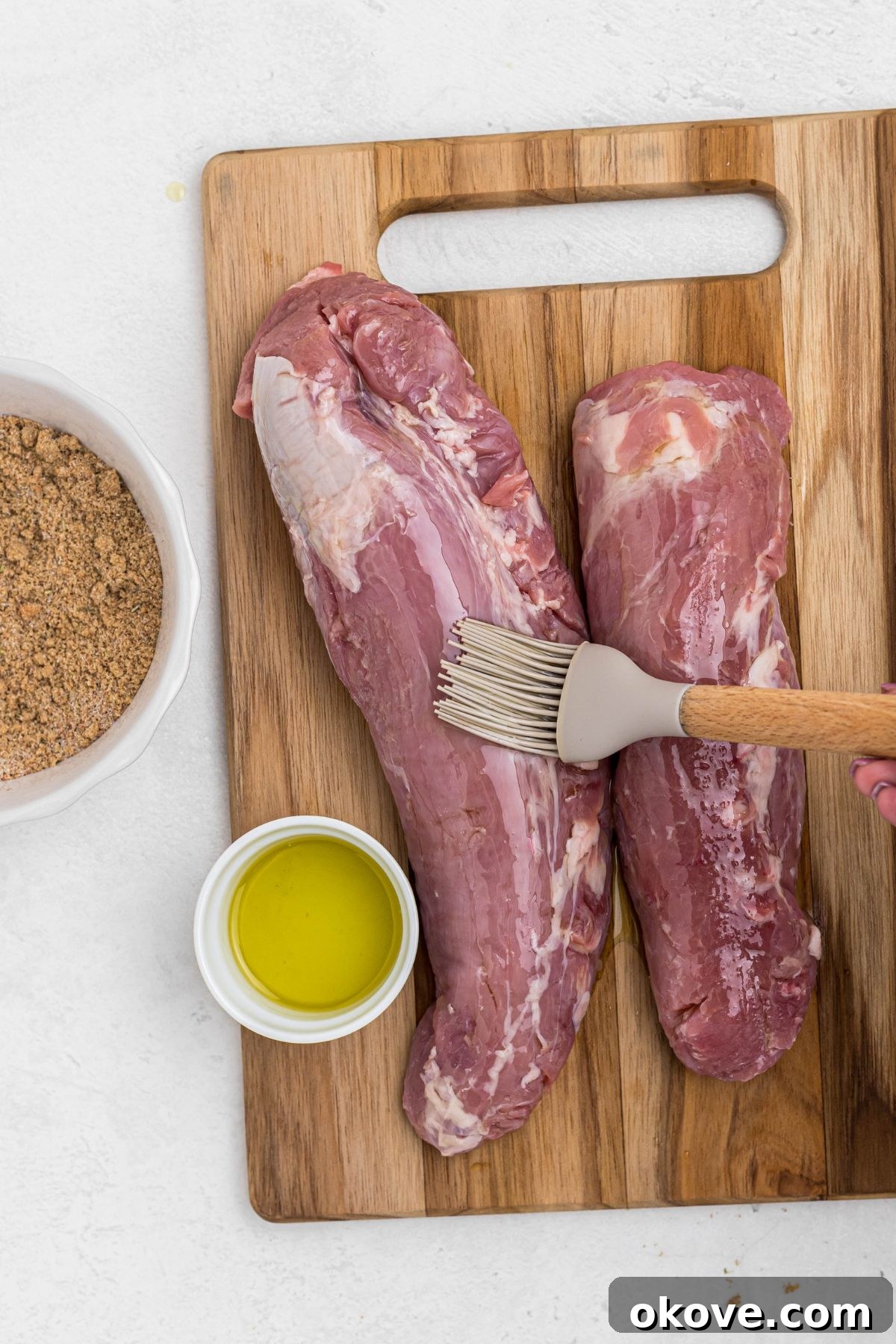
- Prepare the Pork Tenderloin: Begin by thoroughly patting the pork tenderloin dry with paper towels. This step is essential as it helps the rub adhere better and promotes a superior bark formation. Next, lightly coat the entire surface of the tenderloin with olive oil. This acts as a binder, ensuring your dry rub sticks evenly to the meat. Crucially, take a moment to remove any silver skin—a tough, silvery membrane—using a sharp knife. Gently slide the knife under the silver skin and carefully pull it away. This membrane doesn’t render during cooking and can make the tenderloin chewy, so its removal ensures maximum tenderness.
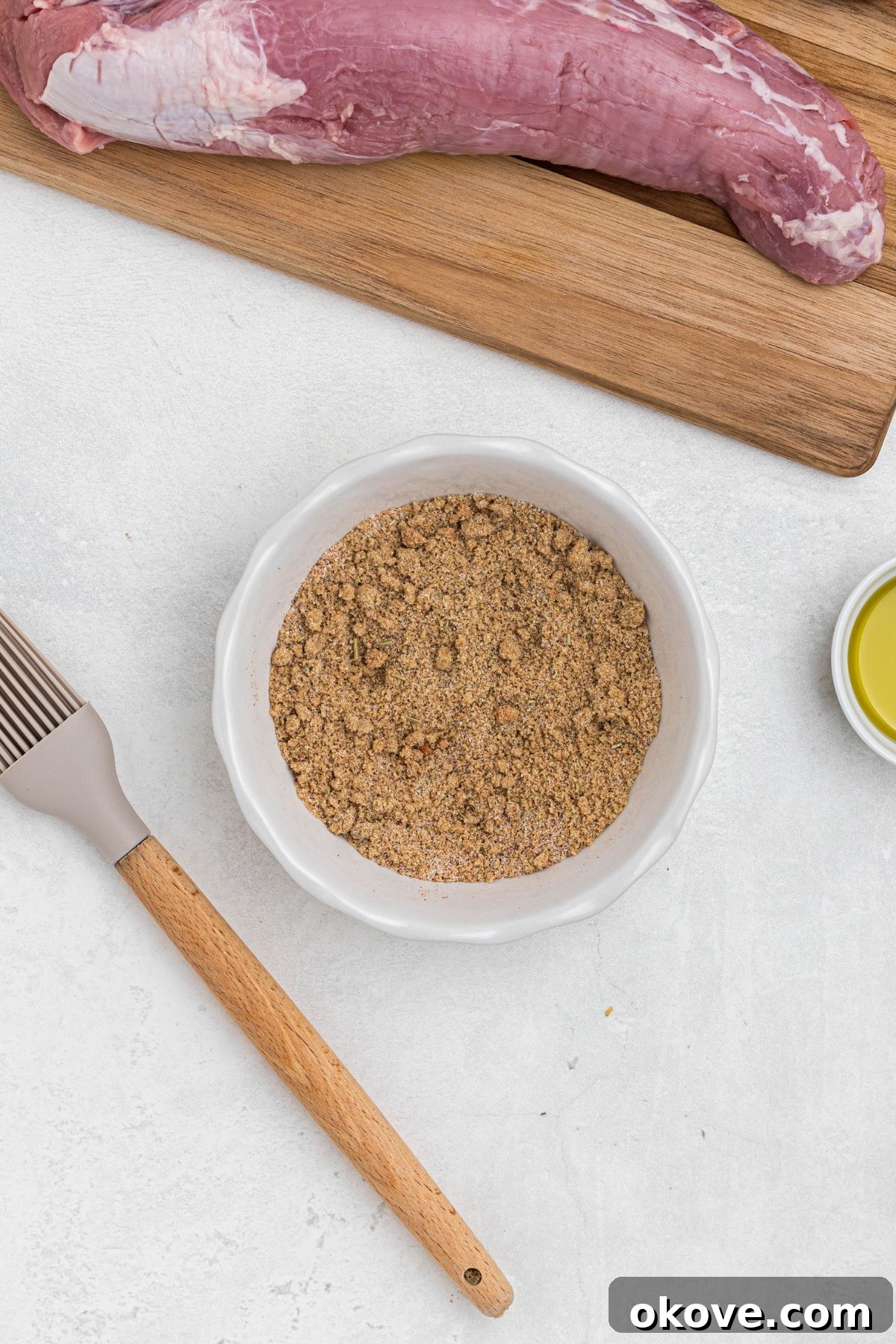
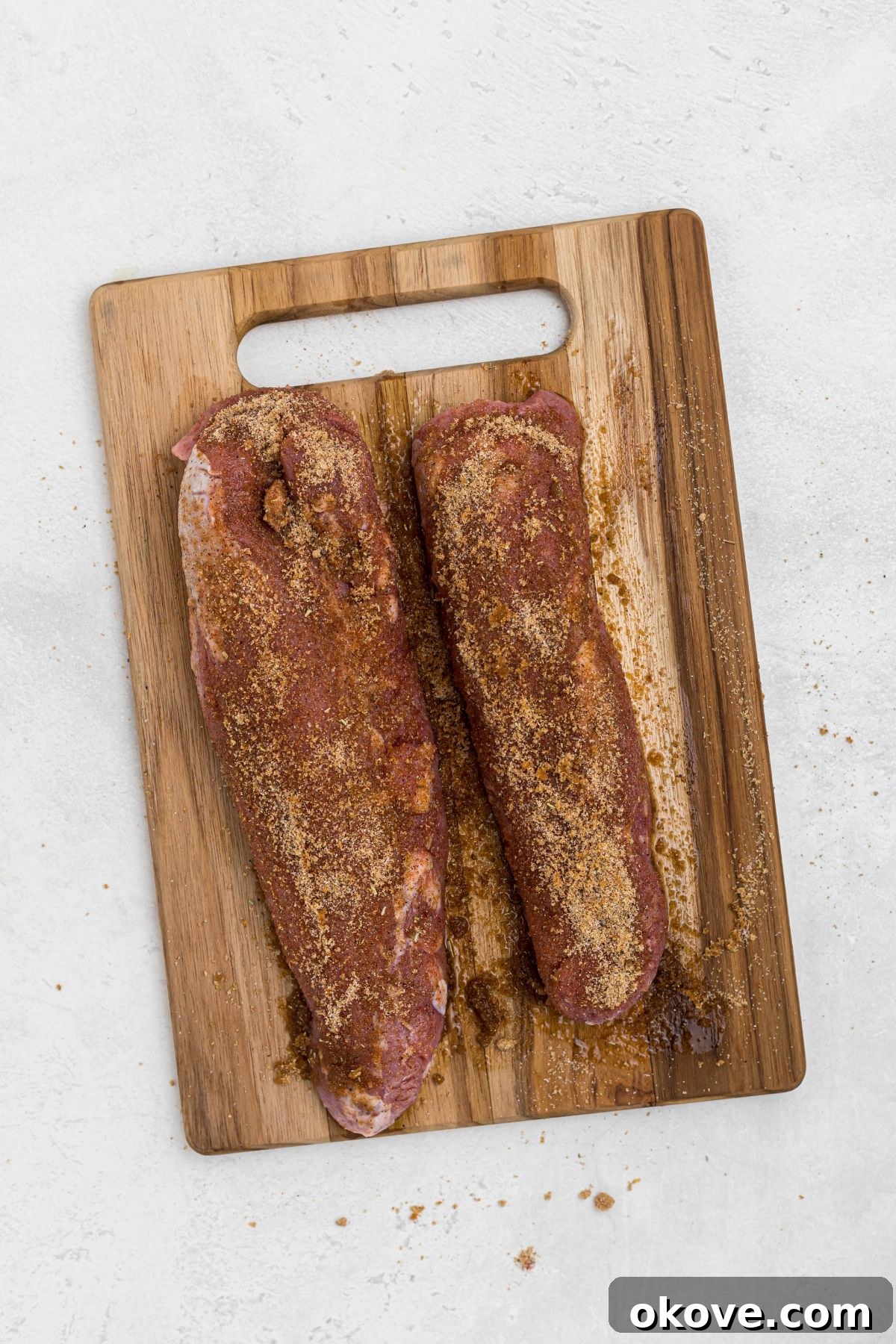
- Apply the Dry Rub: In a small bowl, combine all the dry rub ingredients (brown sugar, kosher salt, black pepper, garlic powder, onion powder, smoked paprika, and dried rosemary). Mix them well to ensure an even distribution of flavors. Generously sprinkle this flavorful rub over all sides of the olive oil-coated tenderloin, pressing it in gently with your hands to create a uniform coating. Once seasoned, allow the meat to rest at room temperature for approximately 20-30 minutes. This rest period allows the salt to begin its work, enhancing flavor and tenderizing the meat.
- Preheat and Smoke: Preheat your smoker to a consistent temperature between 225-250 degrees F (107-121 degrees C). This low and slow temperature is ideal for tenderloin, allowing it to cook gently and absorb maximum smoke flavor without drying out. Add your choice of mild wood, such as apple, cherry, or pecan, for a sweet and subtle smoke profile that complements pork beautifully. Place the seasoned tenderloin directly on the smoker grates, ensuring there is space around each piece for even smoke circulation. Smoke the tenderloin until its internal temperature reaches 140-145 degrees F (60-63 degrees C). Use a reliable meat thermometer inserted into the thickest part of the meat for accurate readings.
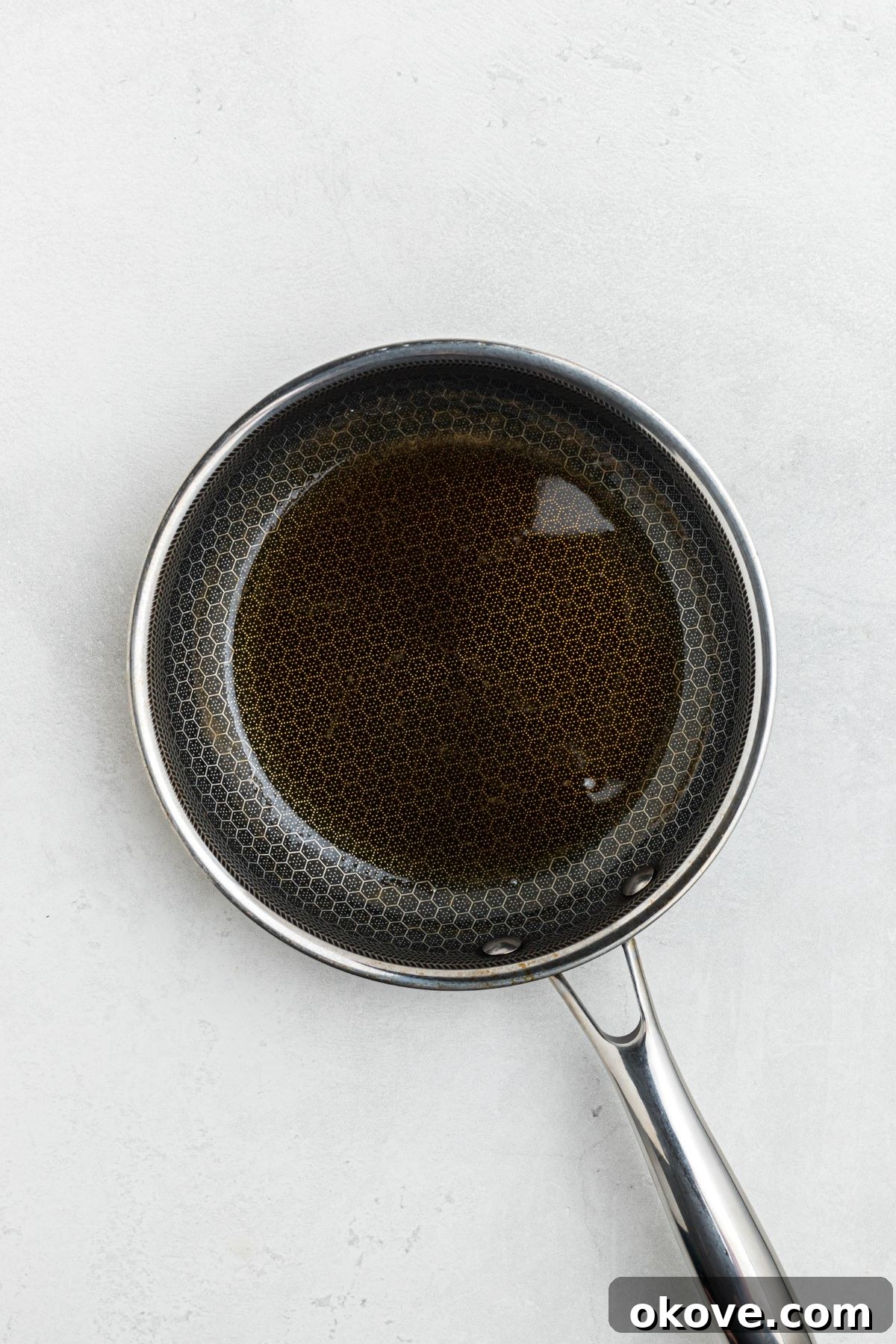
- Prepare the Glaze: While the pork is smoking, prepare your irresistible glaze. In a small saucepan, combine the honey and apple cider vinegar. Place the saucepan over medium-low heat and bring the mixture to a gentle simmer. Stir occasionally for 3-4 minutes, allowing the glaze to slightly thicken. The goal is a syrupy consistency that will beautifully coat the tenderloin. Keep the glaze warm on very low heat until you’re ready to use it.
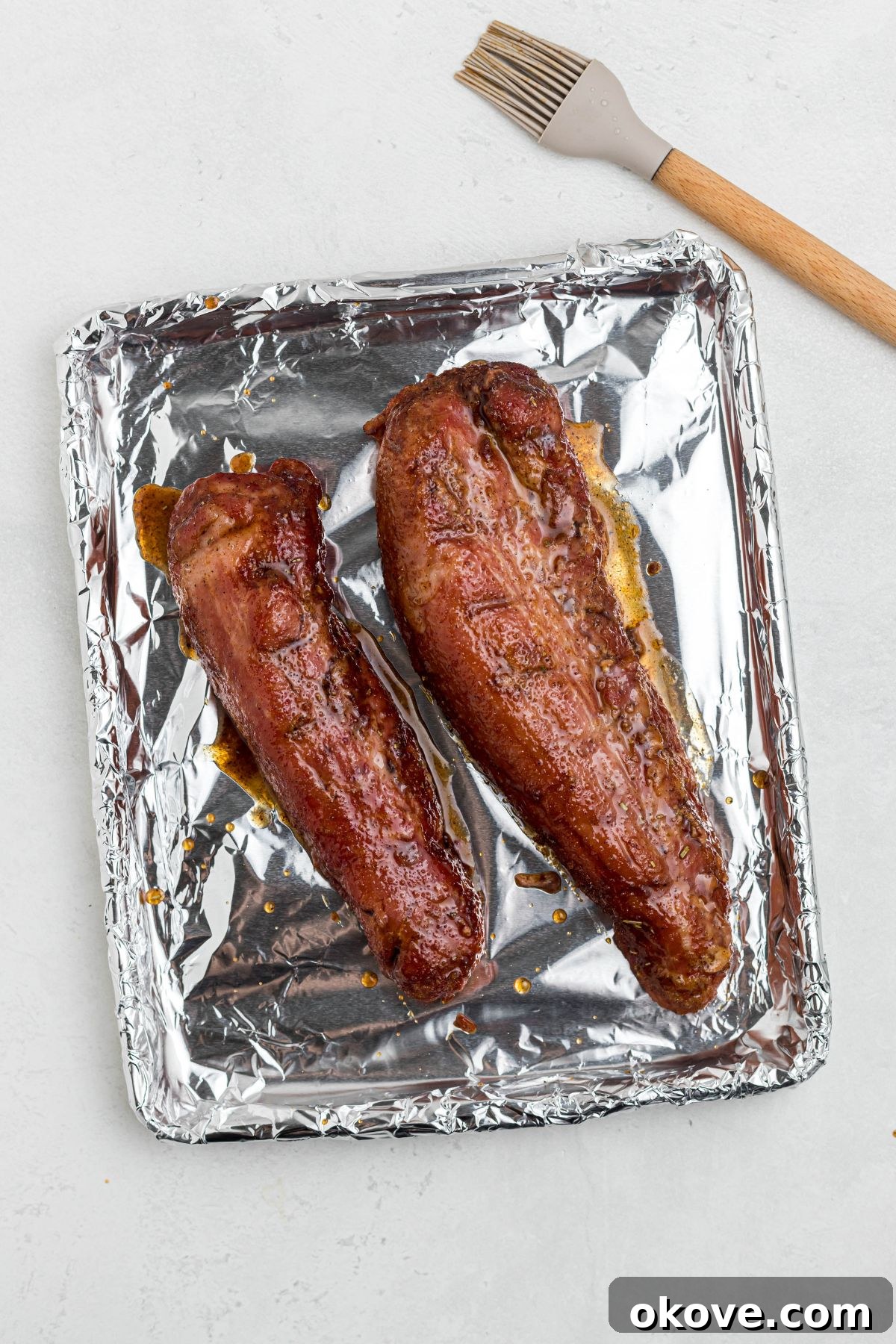
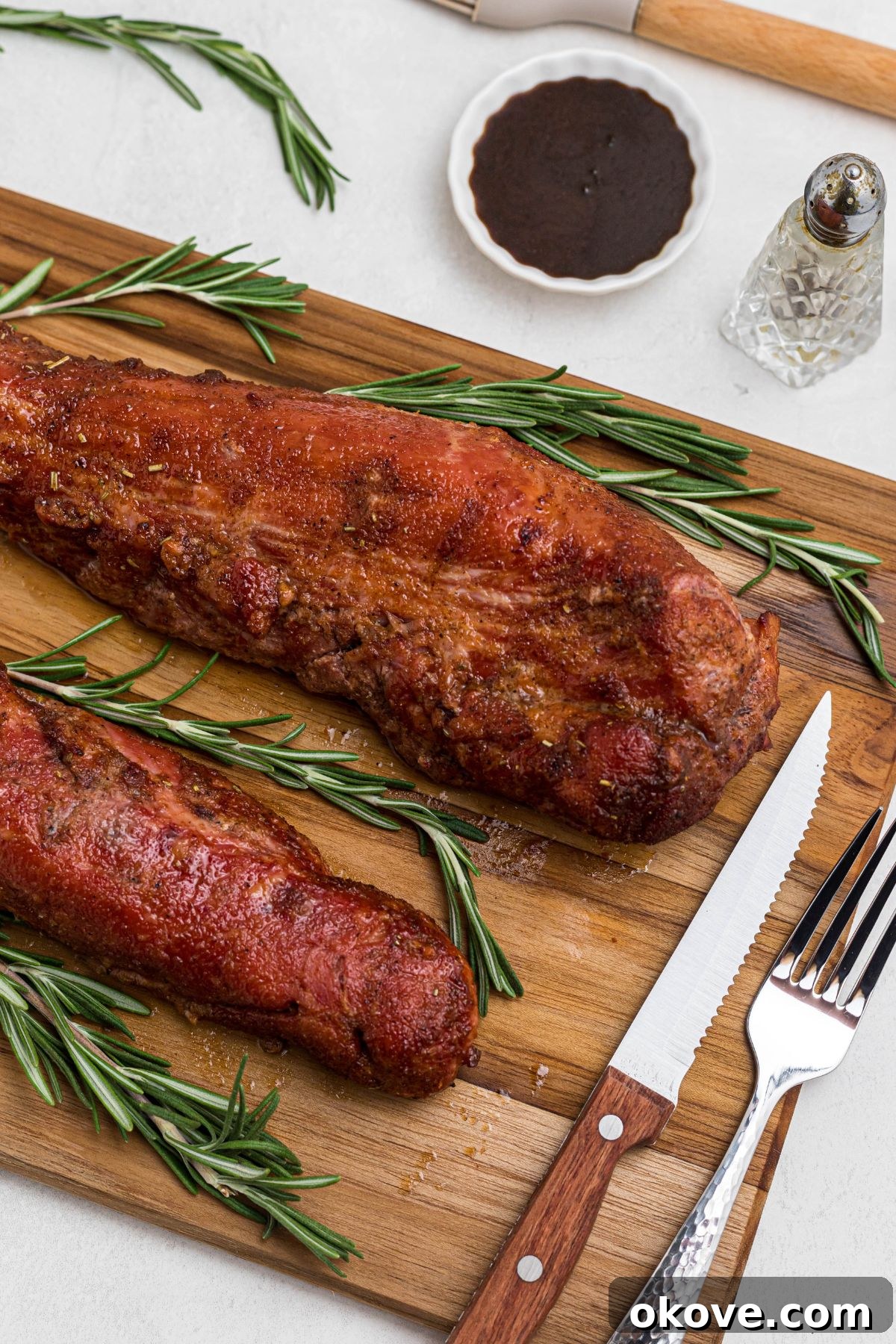
- Glaze and Broil for Finish: Once the tenderloin reaches the desired internal temperature (140-145 degrees F), carefully remove it from the smoker. Transfer the tenderloin to an aluminum foil-lined baking sheet, which will catch any drips and make cleanup easier. Generously brush the warm honey-apple cider glaze over the entire surface of the pork. For that irresistible glossy, caramelized crust, quickly broil the tenderloin in your oven for 1-2 minutes. Watch it very closely during this step, as the glaze can burn quickly due to its high sugar content. You’re looking for a bubbling, slightly browned, and sticky finish.
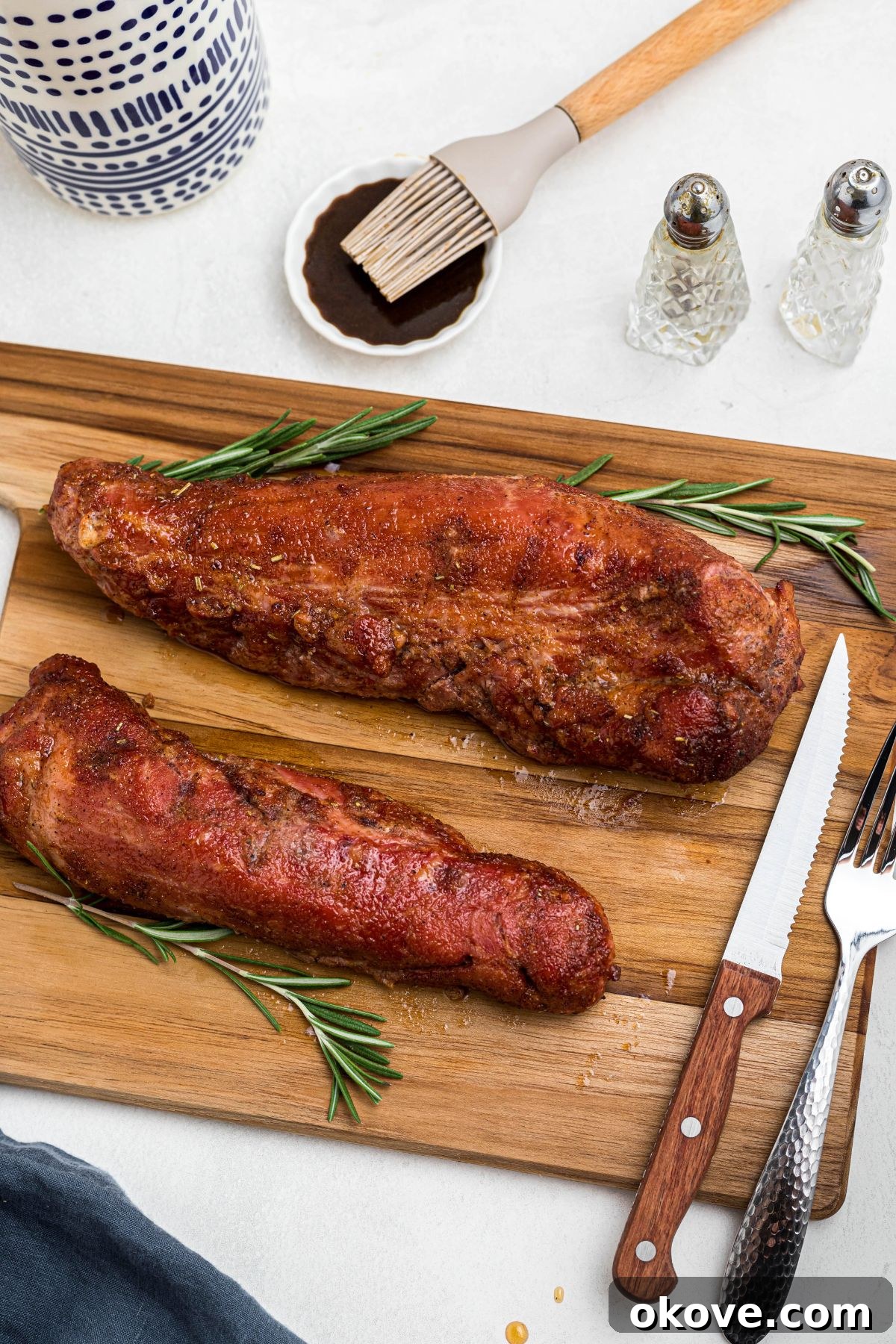
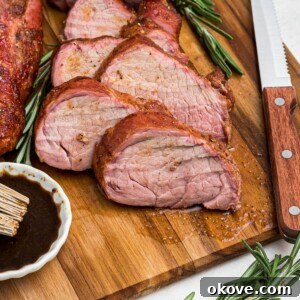
- Rest and Serve: The final, crucial step for juicy pork is resting. Remove the tenderloin from the oven and allow it to rest for 5-10 minutes before slicing. During this time, the juices, which have migrated to the center of the meat during cooking, redistribute throughout the tenderloin, ensuring every slice is incredibly moist and flavorful. After resting, slice the tenderloin against the grain into medallions. Serve immediately with any extra warm glaze on the side for dipping, if desired. Enjoy your perfectly smoked pork tenderloin!
Expert Smoking Tips for Success
Achieving a truly outstanding smoked pork tenderloin involves a few key techniques. These expert tips will help you avoid common pitfalls and ensure your pork is consistently tender, juicy, and packed with flavor:
- Always Remove the Silver Skin: This is arguably the most important preparation step for pork tenderloin. The “silver skin” is a tough, connective tissue membrane that runs along one side of the tenderloin. Unlike fat, it does not render or break down during cooking, regardless of how long you smoke it. If left intact, it will contract during cooking, making the meat tough and chewy. To remove it, slide a sharp, thin knife (like a fillet knife or boning knife) under one end of the silver skin. Grip the silver skin firmly with your other hand, then gently saw the knife along the length of the membrane, keeping the blade angled slightly upwards to avoid cutting into the meat too much.
- Cook to Temperature, Not Time: Pork tenderloin is a very lean cut of meat, which means it cooks relatively quickly and can become dry if overcooked. Relying solely on cooking time can be misleading due to variations in tenderloin thickness and smoker temperature fluctuations. The most reliable way to ensure perfect doneness is to use a high-quality meat thermometer. Insert the probe into the thickest part of the tenderloin, avoiding any bone (if present, though tenderloin is boneless) or pockets of fat. Aim to remove the pork when it reaches an internal temperature of 140-145 degrees F (60-63 degrees C). The temperature will continue to rise by a few degrees (carryover cooking) during the resting period, bringing it to the safe zone of 145 degrees F (63 degrees C) for pork.
- Understand the Importance of Resting: This step is non-negotiable for juicy meat. As meat cooks, the muscle fibers contract and push moisture to the center. If you slice into the tenderloin immediately after removing it from the smoker, all those precious juices will flood out onto your cutting board, leaving you with dry meat. Allowing the tenderloin to rest for 5-10 minutes (covered loosely with foil to retain warmth) gives the muscle fibers time to relax, reabsorbing and redistributing those flavorful juices throughout the entire cut. This results in uniformly moist and tender slices.
- Slice Against the Grain: Once rested, pay attention to the direction of the muscle fibers, known as “the grain.” For maximum tenderness, always slice the pork tenderloin against the grain. Slicing with the grain leaves you with long, chewy fibers. Cutting against it shortens those fibers, making each bite significantly more tender and easier to chew.
- Monitor Your Smoker Temperature: Consistency is key in smoking. Ensure your smoker maintains the target temperature of 225-250°F throughout the cook. Frequent fluctuations can lead to uneven cooking or a less desirable bark.
Smoked Pork Tenderloin FAQs
Yes, smoked pork tenderloin can be prepared in advance. Smoke the tenderloin as directed in the recipe. Once it has cooled, slice it and store it in an airtight container in the refrigerator for up to 3 days. When ready to serve, gently reheat the slices in the oven or microwave, and brush with extra warm glaze for a fresh finish. Be careful not to overcook when reheating to maintain moisture.
For pork tenderloin, which is a relatively delicate meat, a mild fruitwood is often preferred. Apple wood pellets are my go-to choice for their sweet, mild flavor that enhances the pork without overpowering it. A blend of apple and cherry wood also creates a wonderfully balanced and aromatic smoke. If you desire a bolder smoke flavor, you can use hickory in moderation, but be mindful that too much hickory can be intense for tenderloin.
The key to keeping smoked pork tenderloin moist lies in preventing overcooking and allowing it to rest properly. Always remove the tenderloin from the smoker when it reaches an internal temperature of 140-145 degrees F (60-63 degrees C), as it will continue to cook a few degrees more during the rest. Secondly, let it rest, covered loosely with foil, for 5-10 minutes before slicing to allow juices to redistribute. Additionally, spritzing the tenderloin with apple juice every 30-45 minutes during the smoking process can help maintain surface moisture and add flavor.
Smoking pork tenderloin at 225-250 degrees F (107-121 degrees C) typically takes about 1 to 1.5 hours, depending on the thickness of the tenderloin and the consistency of your smoker’s temperature. Always rely on a meat thermometer to determine doneness, rather than strict timing.
Absolutely! While honey provides a unique flavor and shine, you can substitute it with maple syrup for a richer, more earthy sweetness, or even a simple brown sugar glaze for a more classic BBQ profile. Adjust the apple cider vinegar to taste, as different sweeteners have varying levels of sweetness.
If you don’t have a broiler, or prefer not to use it, you can still achieve a lovely caramelized glaze. After brushing the tenderloin with the warm glaze, return it to the smoker for an additional 10-15 minutes, increasing the smoker temperature to 275-300 degrees F (135-149 degrees C) if possible. This will allow the glaze to set and slightly caramelize, though it may not achieve the same intense char as broiling. Alternatively, you can briefly sear the glazed tenderloin in a hot cast-iron skillet on all sides.
More Easy Dinner Recipes
Holidays
Christmas Chicken
Smoker and BBQ Recipes
Smoked Mac and Cheese
Holidays
Roasted Turkey
Meals
Dorito Casserole
If you have tried this recipe or any others from Celebrating Simply, I’d love it if you would leave a ⭐ star rating and share your thoughts in the ✍️ comments below. Your feedback means a lot!
Smoked Pork Tenderloin
Share by Email
Print Recipe
Equipment
-
Smoker (I use a pellet smoker for consistent results)
-
Meat Thermometer (instant-read or probe)
-
Baking Sheet
-
Small Bowl
-
Small Saucepan
-
Basting Brush
Ingredients
For the Pork and Dry Rub
- 3-4 pounds pork tenderloin (2 pieces)
- 2 tablespoons olive oil
- 2 tablespoons brown sugar (packed)
- 2 teaspoons kosher salt
- 1 teaspoon ground black pepper
- 1 teaspoon garlic powder
- 1/2 teaspoon onion powder
- 1/2 teaspoon smoked paprika
- 1/2 teaspoon dried rosemary
For the Sweet & Tangy Glaze
- 3 tablespoons honey
- 2 tablespoons apple cider vinegar
Instructions
-
Pat the pork tenderloin dry with paper towels and coat it lightly with olive oil so the rub sticks. Crucially, remove any silver skin with a sharp knife for the most tender results.
-
Mix all the rub ingredients together in a small bowl. Sprinkle evenly over all sides of the tenderloin, pressing it in gently. Let the seasoned meat rest at room temperature for about 20–30 minutes before smoking to allow flavors to meld.
-
Set your smoker to 225–250 degrees F (107–121 degrees C) and add a mild wood such as apple, cherry, or pecan for a sweet, subtle smoke.
-
Place the tenderloin directly on the smoker grates. Smoke the tenderloin until it reaches an internal temperature of 140–145 degrees F (60-63 degrees C) in the thickest part.
-
While the pork is smoking, combine the honey and apple cider vinegar in a small saucepan over medium-low heat. Simmer for 3–4 minutes, stirring occasionally, until slightly thickened and syrupy. Keep warm.
-
Remove from the smoker and place on an aluminum foil-lined baking sheet. Brush generously with the warm glaze. Broil for 1–2 minutes until the glaze bubbles and caramelizes, watching closely to prevent burning.
-
Let the tenderloin rest for 5–10 minutes before slicing. This allows the juices to redistribute for maximum tenderness. Serve with extra glaze if desired.
Notes
- Remove silver skin: Taking off the tough membrane ensures the tenderloin cooks evenly and stays incredibly tender. This fibrous layer will not render down during cooking.
- Cook to temperature, not time: Tenderloin is lean and cooks quickly, so use a meat thermometer to confirm the internal temperature to avoid overcooking. (Overcooking will make the meat dry!) Remove at 140-145°F (60-63°C) for perfect medium-rare, allowing for carryover cooking.
- Slice against the grain: This technique shortens the muscle fibers, making each bite extra tender and much easier to chew.
Nutrition
Carbohydrates: 10g
Protein: 35g
Fat: 10g
Saturated Fat: 2g
Polyunsaturated Fat: 1g
Monounsaturated Fat: 5g
Trans Fat: 0.1g
Cholesterol: 111mg
Sodium: 672mg
Potassium: 691mg
Fiber: 0.2g
Sugar: 9g
Vitamin A: 67IU
Vitamin C: 0.1mg
Calcium: 16mg
Iron: 2mg
Nutrition information is automatically calculated and should only be used as an approximation.
Additional Info
Tried this recipe?
Mention @celebratingsimplyrecipes or tag #celebratingsimplyrecipes!