
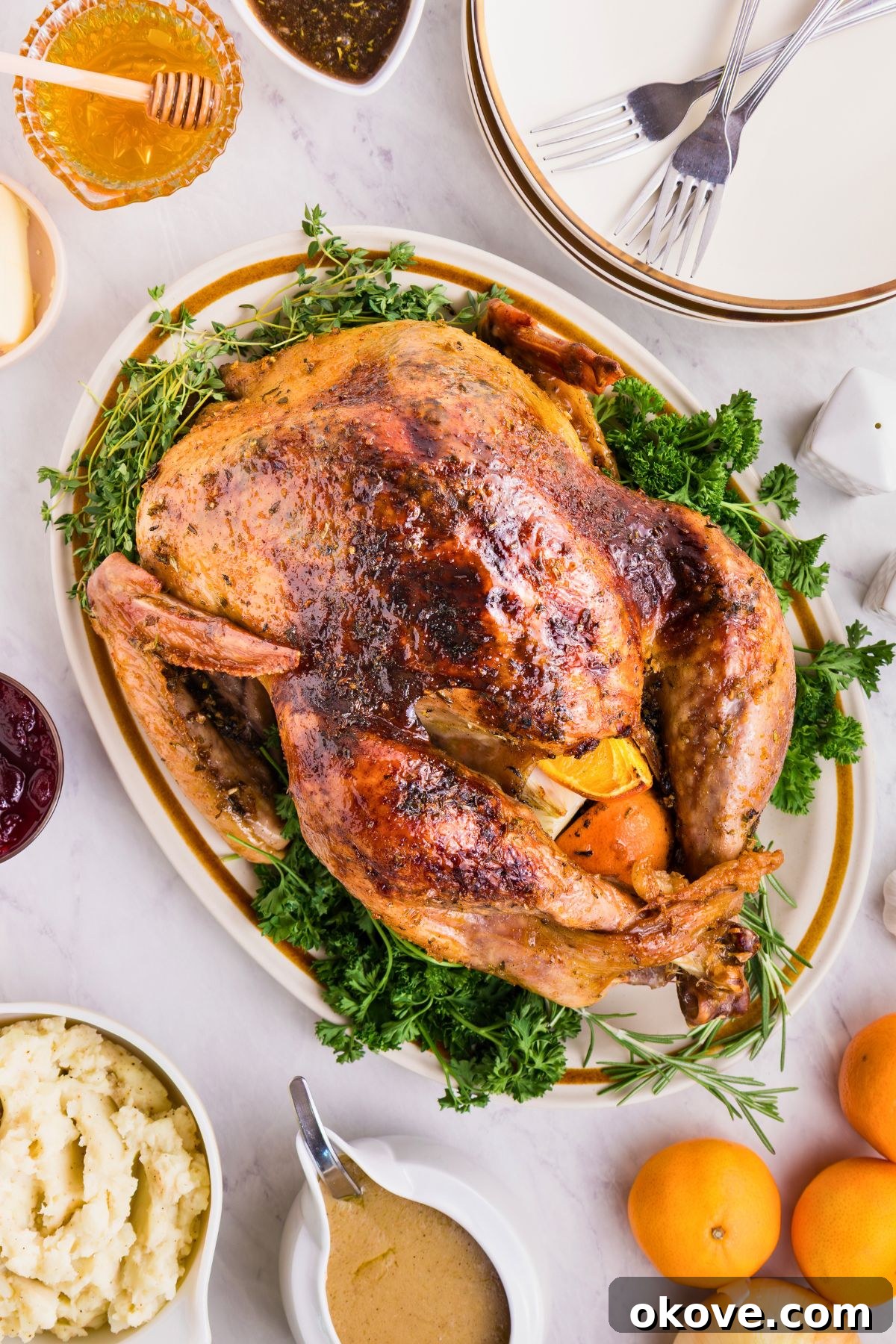
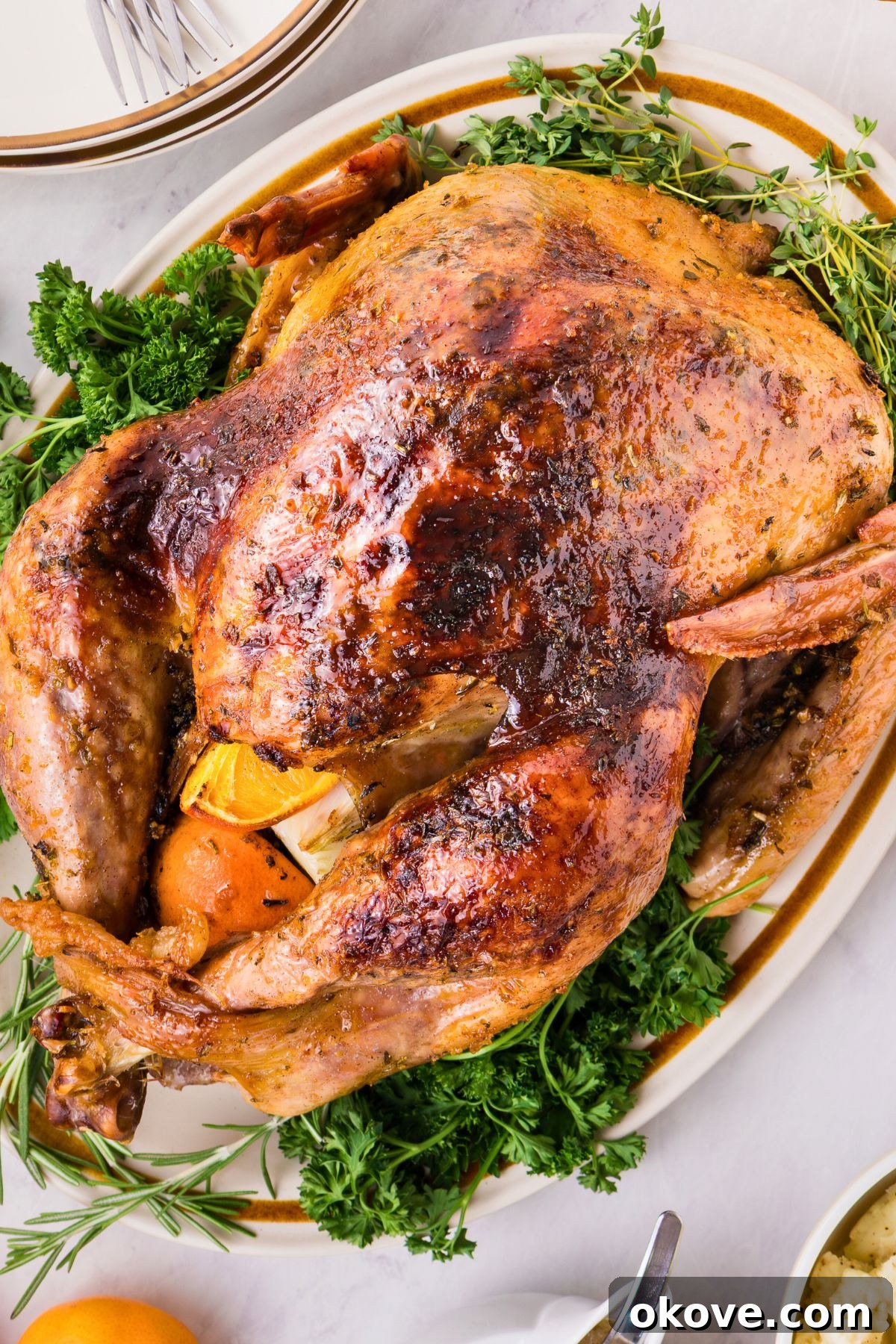
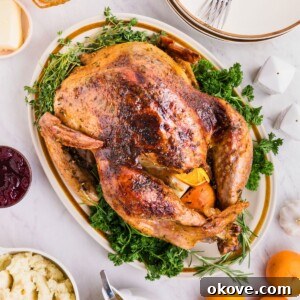
Prepare to impress your guests with this magnificent Roasted Turkey, featuring an exquisite honey orange glaze that truly makes it the centerpiece of any holiday table. This recipe ensures a turkey bursting with flavor, thanks to a unique citrusy dry brine that tenderizes the meat from within. Fresh oranges and onions are strategically stuffed into the cavity, infusing every fiber with aromatic goodness. The final touch, a sweet and savory glaze brushed on during roasting, creates an unforgettable crispy, golden skin and exceptionally juicy meat. This is the kind of turkey that will have everyone asking for the recipe before the meal even concludes.
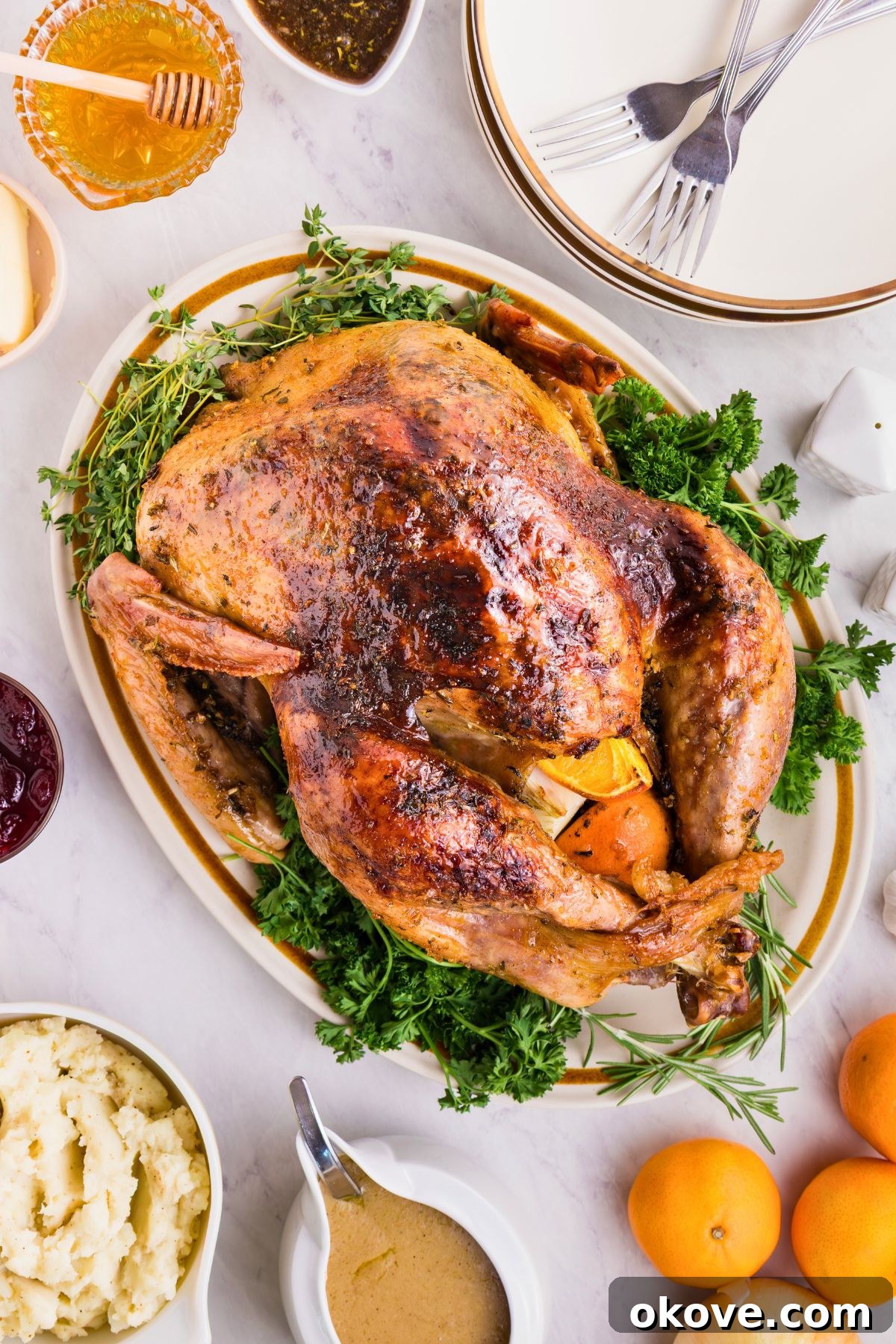
“This turkey is so juicy and flavorful, your guests will be asking for the recipe before dessert is even served.”
-Becky
Year after year, this cherished roasted turkey recipe proves to be a consistent triumph. The carefully developed dry brine is the secret to incredibly tender and moist meat, locking in juices and flavor. A rich, aromatic herb butter, spread generously under and over the skin, imparts a cozy, herbaceous depth that complements the turkey beautifully. Finally, the signature honey orange glaze delivers that magazine-worthy, glossy finish and a perfectly caramelized, crispy skin that’s simply irresistible. Paired with a simple yet flavorful Homemade Gravy, this dish is guaranteed to entice even the most satisfied diners to reach for a second helping. It transforms an ordinary holiday meal into an extraordinary culinary experience.
When planning your festive spread, this glorious roasted turkey serves as the perfect centerpiece. Begin your culinary journey with a delightful starter like Baked Brie, offering a warm and cheesy welcome. For classic side dishes that beautifully complement the turkey, consider fluffy Homemade Dinner Rolls, perfectly seasoned Roasted Potatoes, and a vibrant, tangy Cranberry Orange Sauce that cuts through the richness of the meat. To conclude your unforgettable holiday feast, indulge in seasonal desserts such as the playful Grinch Fudge or a comforting, classic Homemade Apple Pie. Each element is designed to create a harmonious and truly memorable holiday meal.
Table of Contents
- Essential Equipment for Roasting Turkey
- Key Ingredients for the Perfect Roasted Turkey
- Crafting the Honey Orange Glaze
- Delicious Turkey Variations to Try
- Step-by-Step Guide: How to Make Roasted Turkey with Honey Orange Glaze
- Expert Tips for a Flawless Roasted Turkey
- Roasted Turkey FAQs
- More Irresistible Holiday Recipes
- Printable Roasted Turkey Recipe Card
Essential Equipment for Roasting Turkey
- A large roasting pan with rack: This critical piece of equipment elevates the turkey, allowing hot air to circulate evenly around all sides. This promotes consistent cooking and helps achieve that desired crispy skin, preventing the bottom from becoming soggy.
- Kitchen twine: Essential for trussing the turkey, which means tying the legs together and tucking the wings. Trussing helps the turkey cook more evenly, maintains its shape, and prevents the wingtips and thinner parts of the breast from overcooking and drying out.
- Meat thermometer: Your best friend for ensuring the turkey is perfectly cooked and safe to eat. An accurate thermometer takes the guesswork out of roasting, guaranteeing your turkey reaches the ideal internal temperature for juiciness without being undercooked or overcooked.
Key Ingredients for the Perfect Roasted Turkey
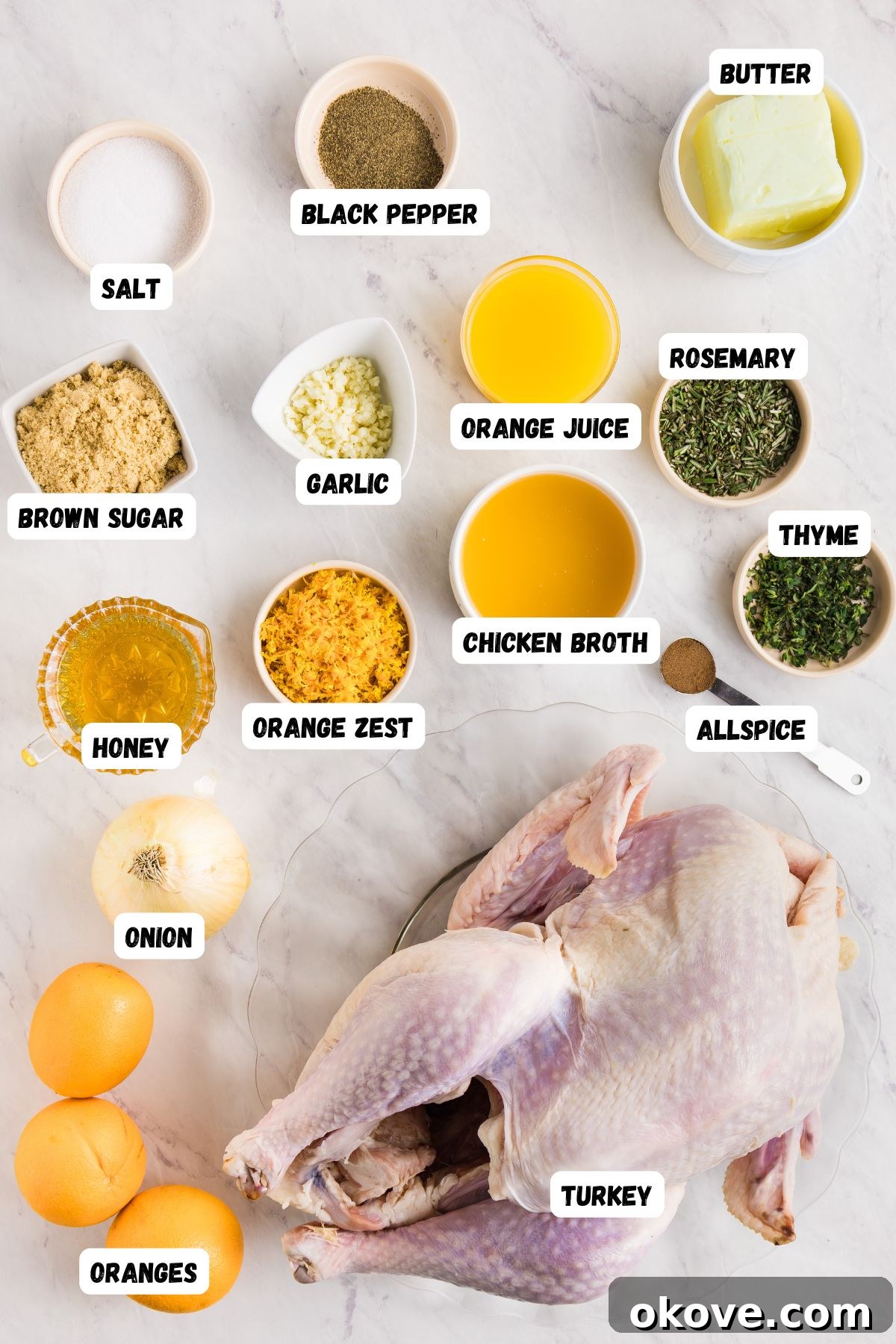
- (13-15 lb) Turkey, thawed: The undisputed star of your holiday meal. Ensure your turkey is completely thawed before beginning the brining process for even cooking and optimal results.
- Brown sugar: This ingredient plays a dual role in the dry brine. It helps balance the saltiness and contributes to a beautiful, golden-brown skin, adding a subtle hint of sweetness to the overall flavor profile.
- Zest of 1 orange: Integral to the citrusy dry brine, orange zest provides a vibrant, aromatic brightness that permeates the turkey meat, elevating its natural flavors.
- Butter, softened: Used in the herb rub, softened butter is easily spread under and over the turkey skin, creating a rich, flavorful layer that contributes to both moisture and browning.
- Chopped rosemary: This classic herb infuses the turkey with its earthy, piney aroma and flavor, a staple in traditional holiday poultry dishes.
- Chopped thyme: Offering a subtle lemony freshness, thyme beautifully complements the other herbs and citrus notes, adding depth and complexity to the turkey.
- Garlic cloves, finely chopped: Garlic is a foundational flavor, adding savory depth and warmth to both the herb butter rub and the exquisite honey orange glaze.
- Allspice: A wonderfully warm and aromatic spice, allspice ties together all the complex flavors in both the herb rub and the glaze, adding a hint of festive spice.
- Oranges, quartered: Stuffed into the turkey cavity, these oranges release their juices and aromas during roasting, keeping the meat moist and infusing it with a delicate citrus essence.
- Onion, quartered: Alongside the oranges, quartered onions add a savory, aromatic foundation to the turkey’s cavity, contributing to the overall depth of flavor.
- Chicken broth or Chicken Stock: Placed at the bottom of the roasting pan, this liquid helps create a steamy environment, keeping the turkey moist and preventing it from drying out during the long roasting process.
Crafting the Honey Orange Glaze
- Orange juice: The bright, tangy base of our signature glaze, providing a fresh citrus foundation that pairs perfectly with the turkey.
- Brown sugar: Sweetens the glaze and plays a crucial role in caramelization, helping to create that gorgeous, glossy finish on the turkey skin.
- Honey: Adds a sticky richness and a beautiful golden sheen to the glaze, contributing to a deep, complex sweetness.
- Butter: Helps the glaze cling effectively to the turkey skin and enriches the flavor, creating a luxurious mouthfeel.
- Garlic cloves, finely chopped: Infuses the glaze with a savory counterpoint to the sweetness, adding depth and a touch of warmth.
- Allspice: Contributes a warming, festive spice to the glaze, harmonizing with the other ingredients to create a well-rounded flavor profile.
- Orange zest: Intensifies the vibrant citrus flavor of the glaze, providing concentrated aromatic notes that truly shine.
- Chopped rosemary: Adds elegant herbal notes to the glaze, complementing the savory aspects of the turkey and the sweet citrus.
- Chopped thyme: Balances the sweetness of the glaze with its subtle lemony-fresh flavor, ensuring the glaze is complex and not overly sugary.
Delicious Turkey Variations to Try
- Use fresh sage instead of thyme: Swapping thyme for fresh sage introduces a warm, peppery, and slightly earthy flavor that is wonderfully traditional for holiday poultry. This variation offers a deeper, more robust herbal profile.
- Try a maple glaze: For a different kind of deep sweetness, replace the honey with pure maple syrup in the glaze. This will give your turkey a rich, woodsy sweetness and a beautiful amber hue, perfect for a cozy autumn spread.
- Add cranberries to the stuffing: Introduce a delightful pop of tart color and flavor by adding fresh or dried cranberries to the orange and onion stuffing in the turkey’s cavity. The cranberries will moisten and add a festive zing.
- Experiment with different citrus: While orange is classic, consider using lemons, limes, or even a mix of citrus fruits for the brine and stuffing to achieve slightly different flavor notes. Lemon can add a brighter, sharper tang.
- Spice it up: For those who enjoy a little heat, a pinch of cayenne pepper or a touch of smoked paprika can be added to the herb butter or glaze for an extra layer of flavor and a subtle kick.
A full and detailed list of all ingredients, with precise measurements, is included in the comprehensive recipe card below for your convenience.
Step-by-Step Guide: How to Make Roasted Turkey (with Honey Orange Glaze)
If starting with a frozen turkey, remember to thaw your turkey thoroughly in the refrigerator. A general rule of thumb is 1 full day of thawing for every 4-5 pounds of turkey. Therefore, for a 14-pound turkey, you’ll need approximately 3 days for complete thawing.
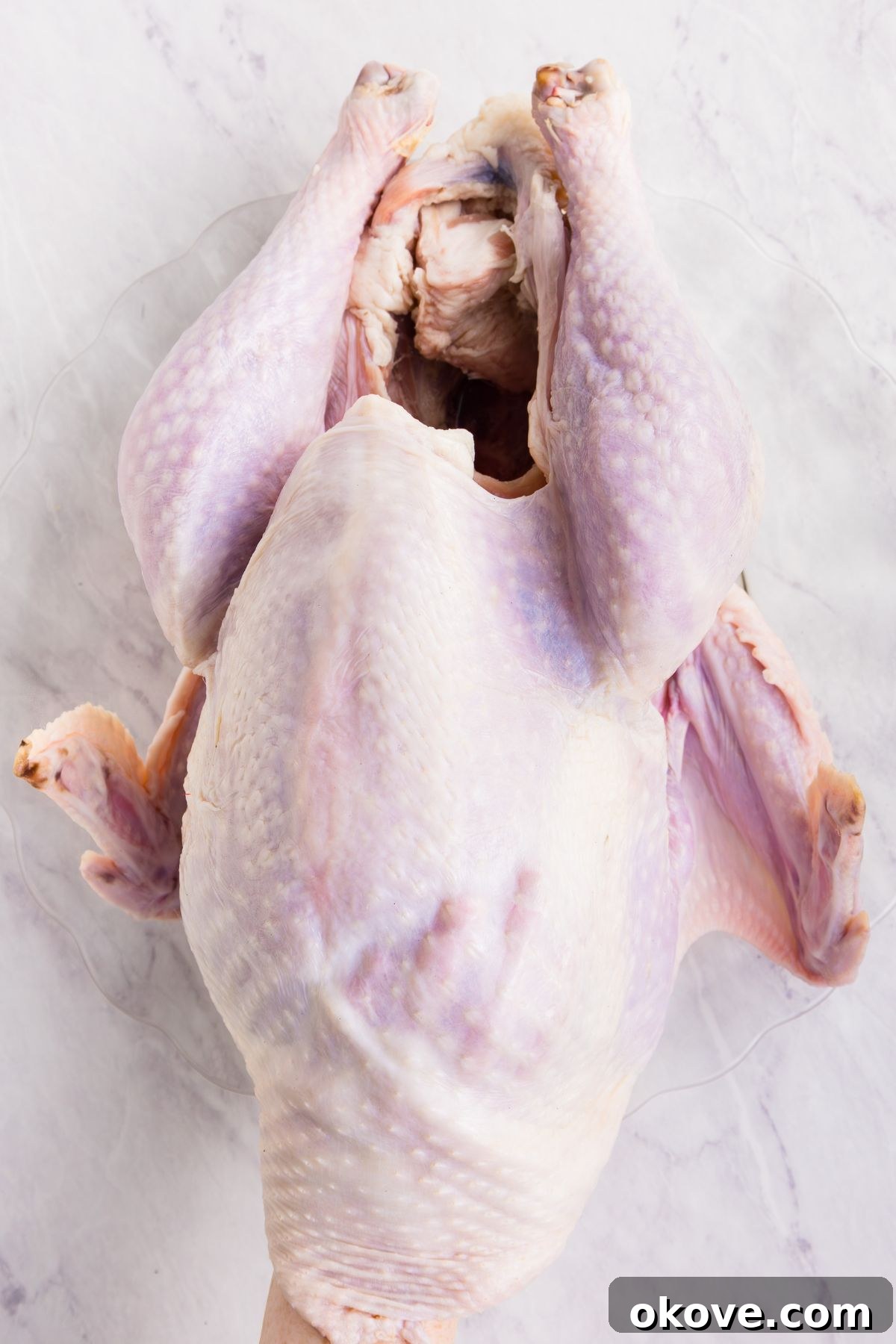
- Prepare the Turkey: Once thawed, use paper towels to thoroughly pat the entire turkey dry, both inside and out. Carefully remove any giblets or neck from the turkey cavity and discard or save for gravy. Gently loosen the skin from the meat over the breast and thighs using your fingers, creating pockets for the herb butter. This helps achieve crispy skin and allows flavors to penetrate deeper.
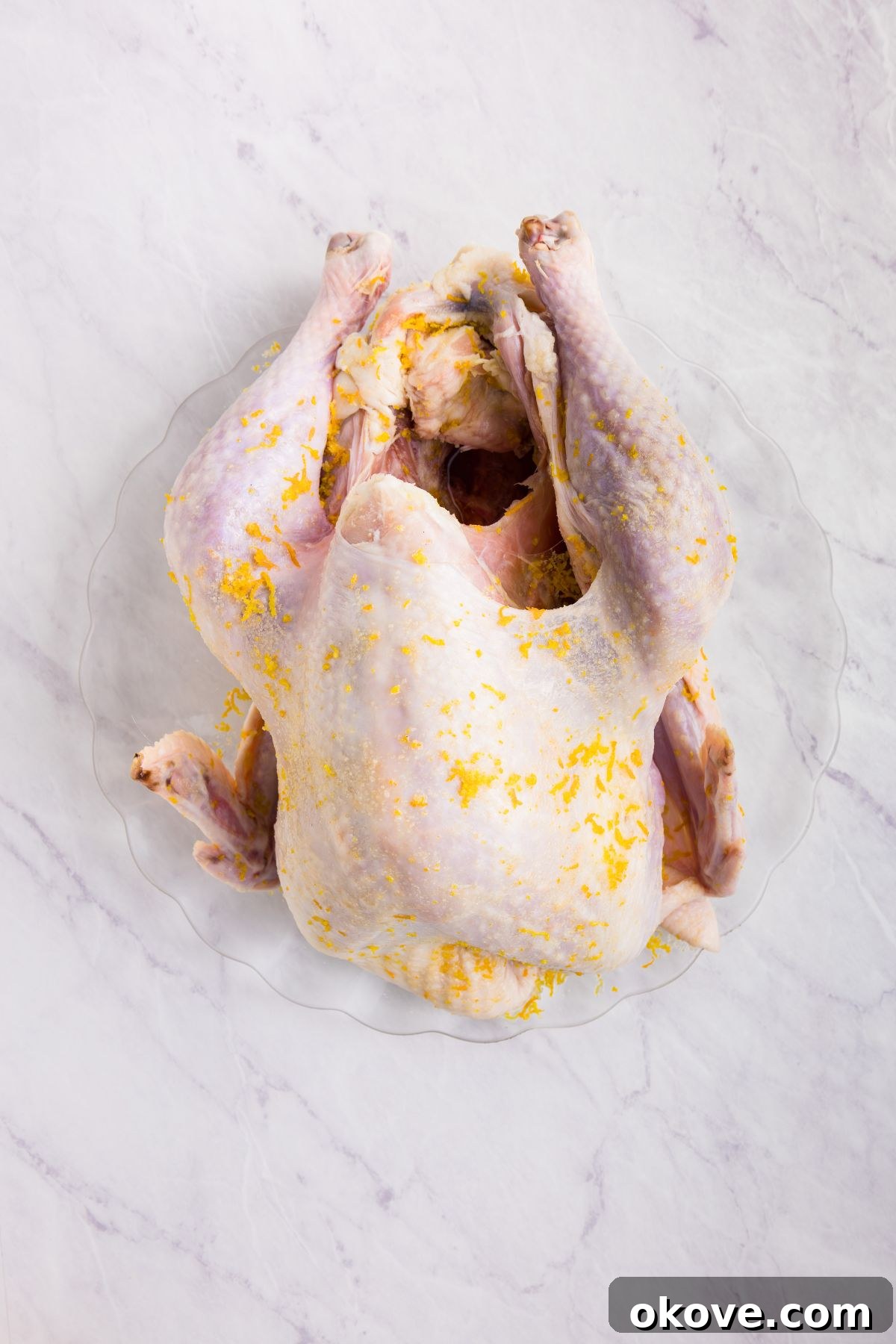
- Apply Dry Brine: In a small bowl, combine the kosher salt, brown sugar, and orange zest for the dry brine. Generously rub this mixture under the loosened skin, then all over the exterior of the turkey, and finally, inside the turkey cavity. Place the brined turkey, uncovered, on a rack in a roasting pan and refrigerate for 1-2 days. This critical step draws out moisture and re-absorbs it with flavor, leading to incredibly juicy and seasoned meat.
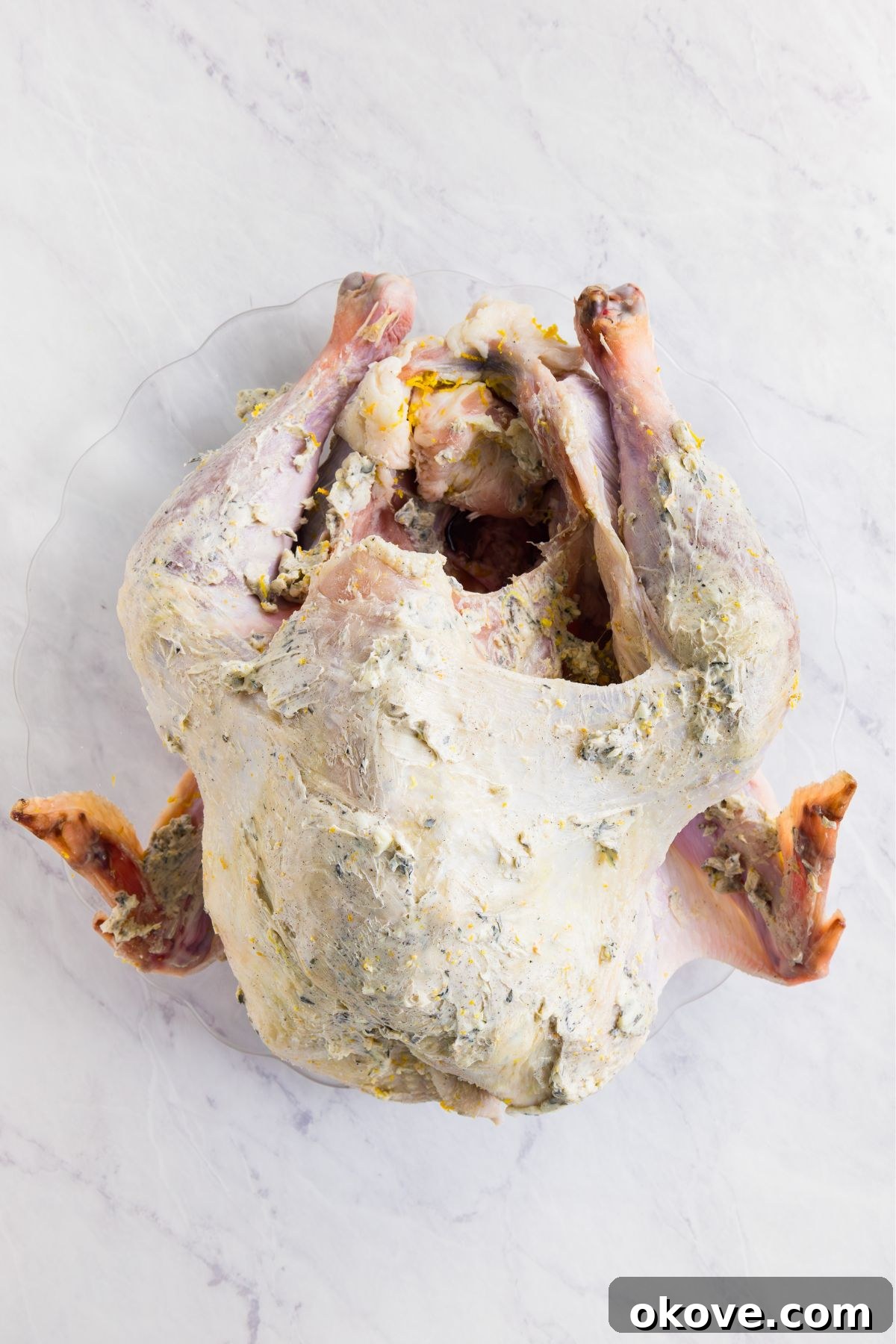
- Prepare for Roasting: On the day of roasting, remove the turkey from the fridge and allow it to sit at room temperature for 30-60 minutes. While it rests, prepare the herb butter: In a bowl, combine the softened unsalted butter with chopped rosemary, chopped thyme, orange zest, finely chopped garlic cloves, ground black pepper, and allspice. Mix thoroughly until well combined. Rub this aromatic herb butter evenly under and over the turkey skin, ensuring maximum flavor distribution.
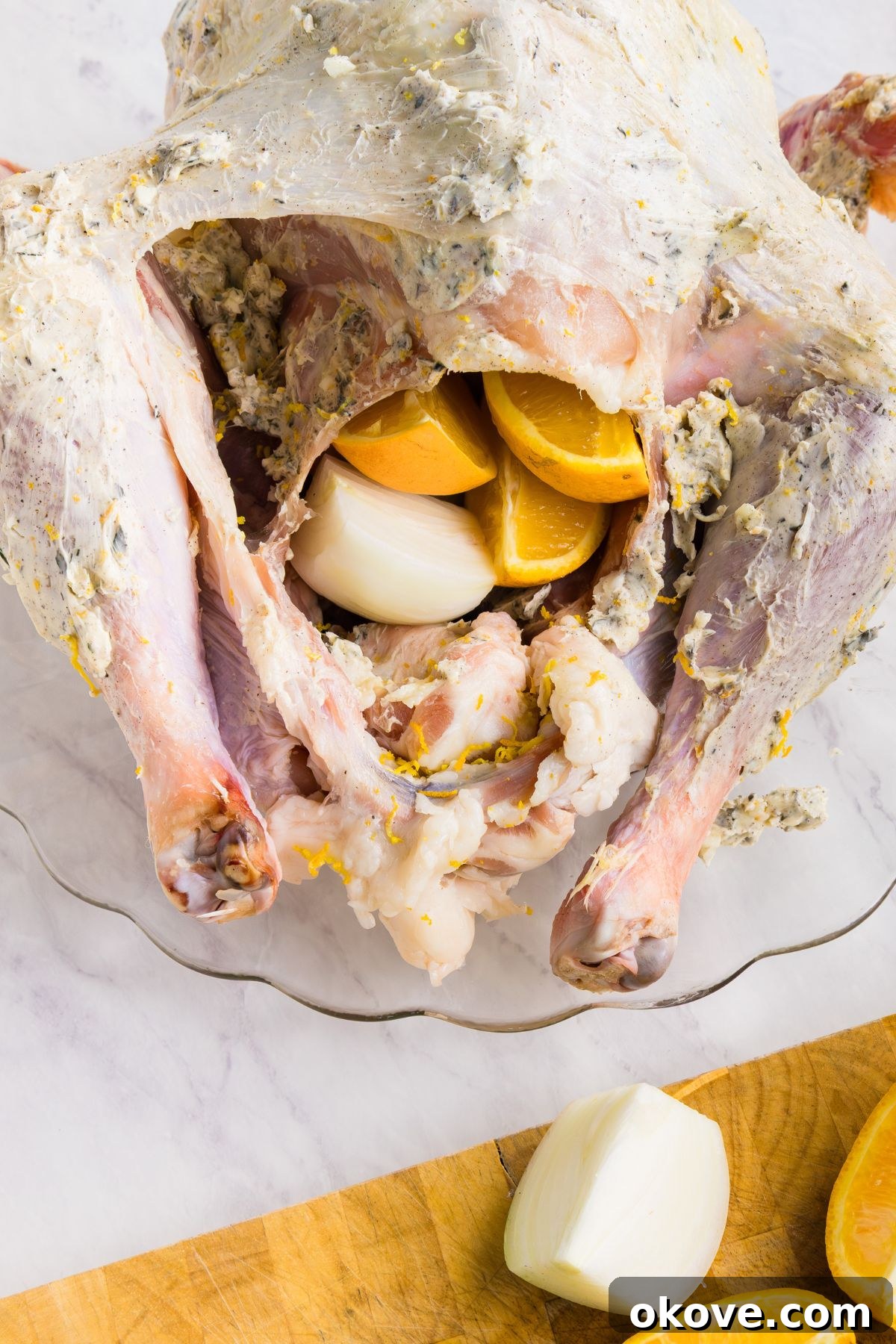
- Stuff and Position: Stuff the turkey cavity generously with the quartered oranges and onion. If desired, tie the turkey legs together with kitchen twine to ensure even roasting and a compact shape. Pour the chicken broth or stock into the bottom of your large roasting pan, then carefully place the prepared turkey onto the rack within the pan. This broth will help keep the turkey moist and contribute to delicious drippings.
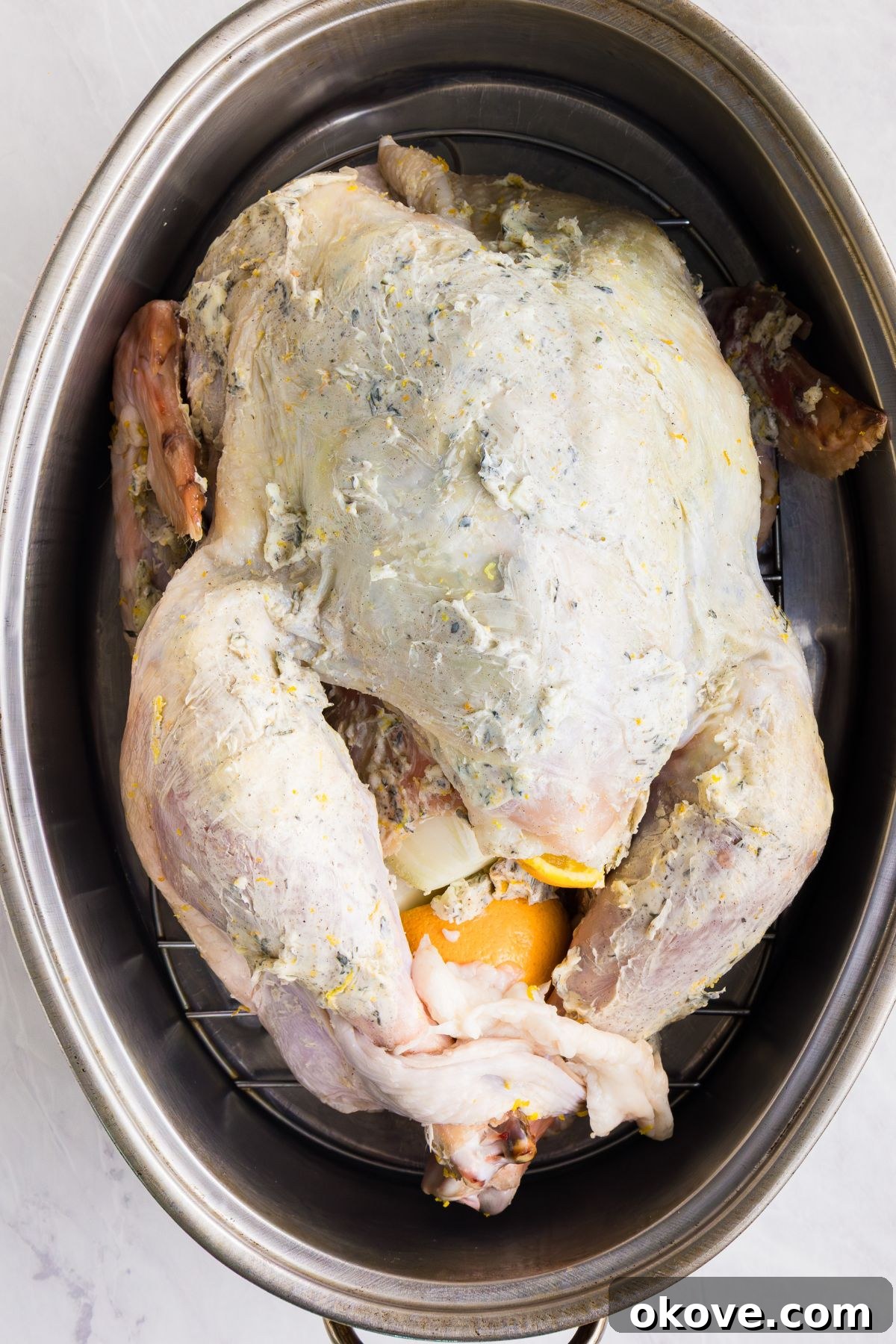
- Initial Roasting: Preheat your oven to 425 degrees F (218 degrees C). Roast the turkey at this higher temperature for 1 hour. This initial high heat helps crisp the skin and achieve a beautiful golden color. After 1 hour, reduce the oven temperature to 325 degrees F (165 degrees C) and continue roasting, adjusting the time based on the turkey’s weight (approximately 13-15 minutes per pound).
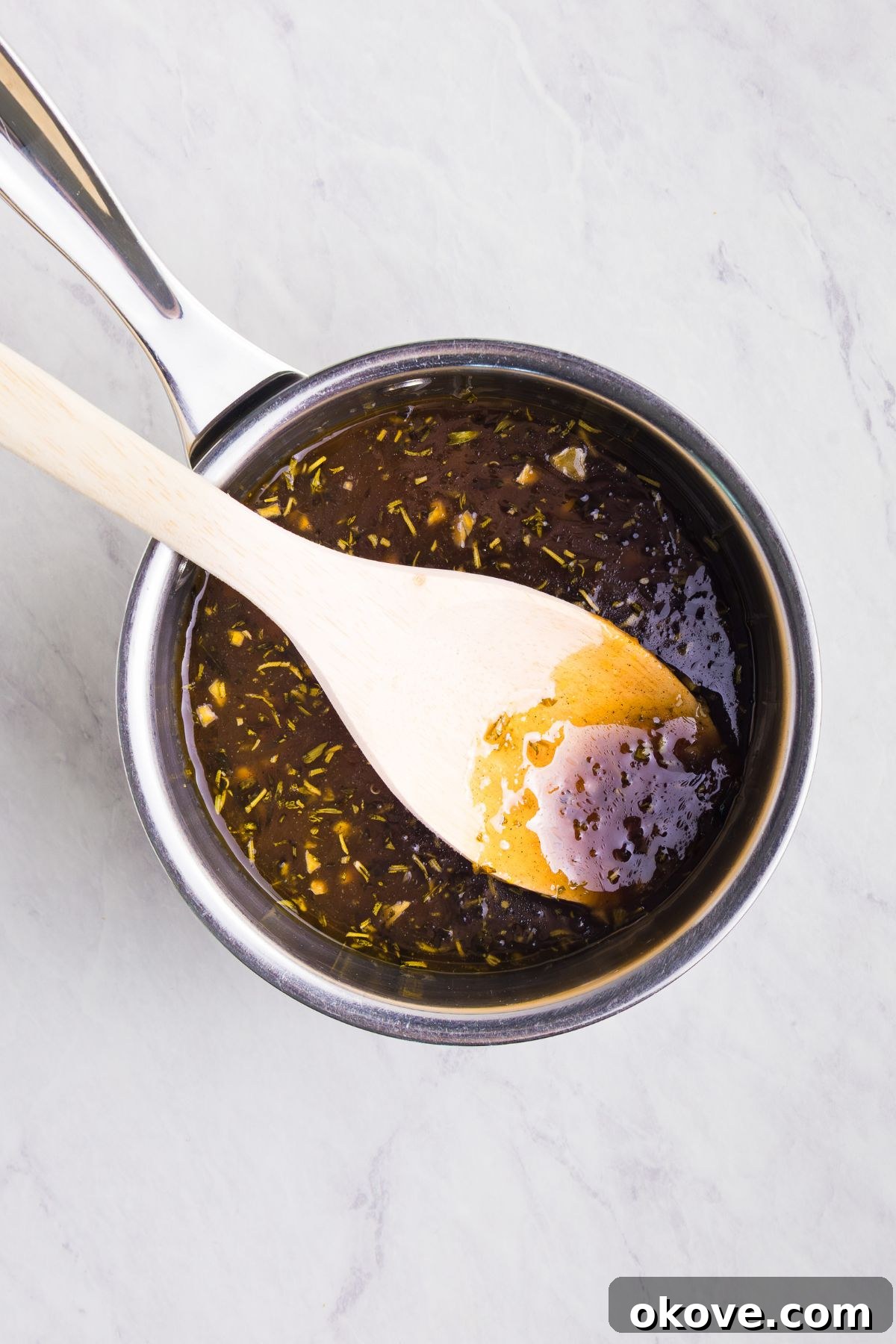
- Prepare the Honey Orange Glaze: While the turkey is roasting, prepare the decadent honey orange glaze. In a medium saucepan, combine the orange juice, brown sugar, honey, unsalted butter, finely chopped garlic cloves, allspice, orange zest, chopped rosemary, and chopped thyme. Bring the mixture to a gentle simmer over medium heat and cook for 15-20 minutes, stirring occasionally, until the glaze has thickened to a syrupy consistency.
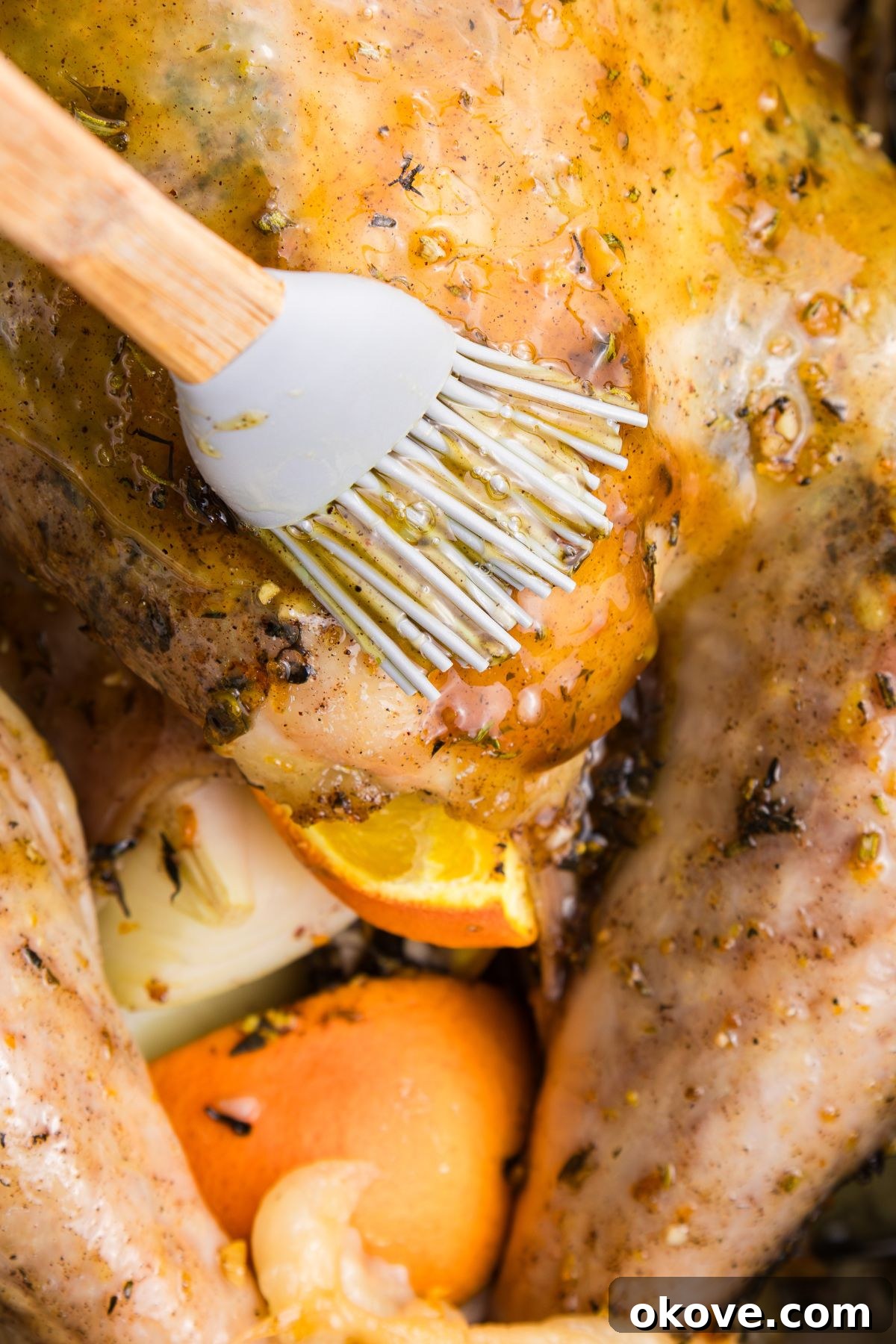
- Glaze and Finish Roasting: Begin brushing the prepared honey orange glaze generously over the turkey once its internal temperature reaches 135 degrees F (58 degrees C). Continue brushing the turkey every 15 minutes thereafter until the internal temperature, measured in the thickest part of the thigh (without touching the bone) or turkey breast, reaches 165 degrees F (74 degrees C). The glaze will caramelize, creating a beautiful, flavorful crust.
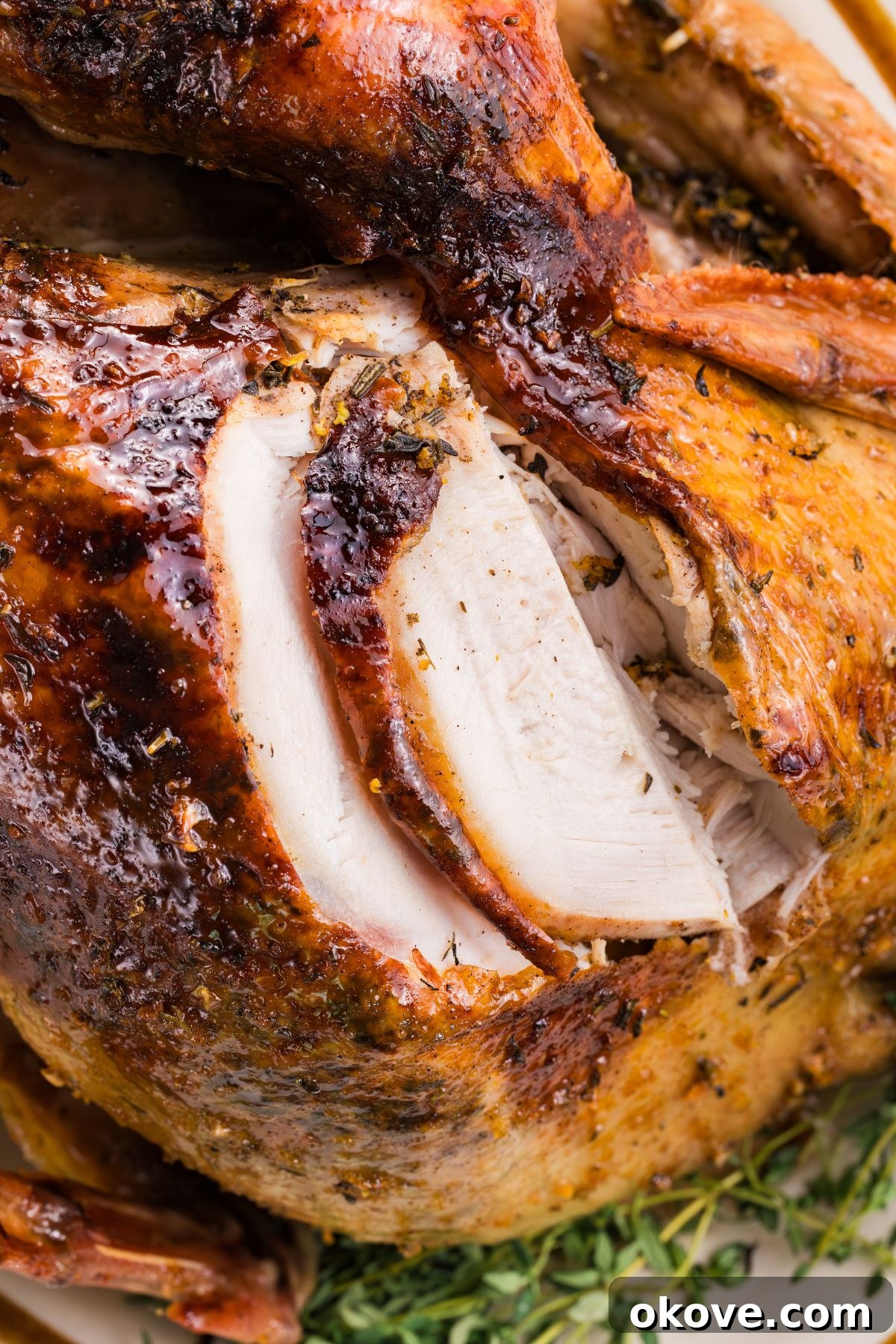
- Rest and Carve: Once the turkey reaches its target internal temperature, remove it from the oven and transfer it to a large cutting board. Tent it loosely with foil and allow it to rest undisturbed for at least 30 minutes before carving. This crucial resting period allows the juices to redistribute throughout the meat, ensuring every slice is incredibly moist and tender. After resting, carve and serve your magnificent roasted turkey!
Expert Tips for a Flawless Roasted Turkey
- Do not rinse after dry brining: It’s a common misconception that you should rinse the turkey after dry brining. Resist this urge! Rinsing will wash away the concentrated seasonings that are key to the crispy skin potential and flavorful meat. Simply pat it dry with paper towels.
- Embrace the honey orange glaze for basting: Forget traditional basting with pan drippings; our honey orange glaze is designed to do the job even better! Brushing the glaze on in layers during the final stage of roasting not only helps the turkey achieve an exceptionally even, golden brown color but also builds incredible sweet-savory flavor and an undeniable glossy shine.
- Understand the magic of dry brining: Dry brining is a game-changer. It works by drawing out moisture from the turkey, which then reabsorbs along with the salt and seasonings. This process breaks down muscle fibers, tenderizing the meat and ensuring that every single bite is incredibly juicy, seasoned, and flavorful throughout, not just on the surface.
- Always use an oven-safe or instant-read thermometer: This is the most crucial tool for perfect turkey. An oven-safe thermometer can stay in the turkey during roasting, allowing you to monitor the temperature continuously without opening the oven. An instant-read thermometer provides quick, accurate readings. Either way, it saves time, prevents overcooking, and guarantees your turkey hits the perfect, safe internal temperature.
- Allow the turkey to rest, always: Patience is a virtue when it comes to roasting turkey. Letting the turkey rest for at least 30 minutes after cooking is non-negotiable. This period allows the muscle fibers to relax and the delicious juices to redistribute throughout the meat, resulting in a moist, tender, and incredibly flavorful bite with every slice.
- Adjust for dried herbs: If you find yourself without fresh herbs, you can absolutely substitute with dried ones. As dried herbs are more concentrated in flavor, use approximately one-third of the amount called for with fresh herbs to avoid overpowering your dish. For example, if the recipe calls for 3 tablespoons of fresh rosemary, use 1 tablespoon of dried.
- Save turkey drippings for gravy: Do not discard those flavorful pan drippings! These golden liquids are liquid gold, packed with concentrated turkey and herb flavors. They form the perfect foundation for making a rich, savory homemade turkey gravy that will elevate your entire meal. Scrape them into a fat separator, then use the defatted drippings as the base for your gravy.
Roasted Turkey FAQs
For a whole bird, a good rule of thumb is to plan on about 1 to 1½ pounds of uncooked turkey per person. If you’re hoping for ample leftovers, which is often a holiday tradition, consider adding an extra ½ pound per person. For instance, a 14-pound turkey can comfortably feed 10–12 people, providing generous portions.
For optimal flavor and juiciness, you should dry brine your roasted turkey for at least 24 hours. However, for truly exceptional results, allowing the turkey to dry brine for 48 hours will yield the most intensely flavorful and tender meat, making a significant difference to your final dish.
No, it is highly recommended NOT to rinse the roasted turkey after dry brining. Rinsing will remove all the beneficial effects of the dry brine, washing away the seasonings and potentially leading to less crispy skin. Simply pat the turkey very dry with paper towels before proceeding with the next steps.
After the initial 1-hour roast at 425 degrees F (218 degrees C), continue roasting at 325 degrees F (165 degrees C) for approximately 13–15 minutes per pound. Always use a reliable meat thermometer to check the internal temperature, as oven temperatures can vary, and cooking times are always an approximation until the target temperature is reached.
To ensure your roasted turkey is fully cooked, safe to eat, and perfectly juicy, the thickest part of the breast (without touching bone) and the inner thigh should register at 165 degrees F (74 degrees C). Use an accurate meat thermometer to verify this temperature.
Always thaw your turkey in the refrigerator; never thaw it on the kitchen counter at room temperature, as this can lead to unsafe bacterial growth. Plan for ample thawing time: allow 1 full day of thawing for every 4-5 pounds of turkey. For example, a 14-pound turkey will typically require about 3 days to thaw completely in the refrigerator.
Yes, absolutely! The dry brine mixture (salt, brown sugar, orange zest) can be mixed together several days in advance and stored in an airtight container at room temperature. This makes holiday meal prep even easier, allowing you to simply apply it to the turkey when you’re ready to start the brining process.
Beyond dry brining, ensuring your turkey skin is completely dry before applying the herb butter is crucial. The dry brine already helps by drawing out moisture. Roasting at an initial high temperature (425°F) for an hour, followed by the lower temperature, combined with the intermittent basting of the honey orange glaze, will give you that irresistible crispy, caramelized skin.
More Irresistible Holiday Recipes
Holidays
Holiday Sliders
Meals
Spiral Ham
Breakfast
Homemade Cinnamon Rolls
Desserts
White Chocolate Chip Cookies
If you have tried this recipe or any others from Celebrating Simply, I’d love it if you would leave a ⭐ star rating and share your thoughts in the ✍️ comments below. Your feedback means a lot!
Roasted Turkey
Equipment
-
Large Roasting Pan
-
Kitchen Twine
-
Meat Thermometer
Ingredients
- 1 Turkey, 13-15 pounds, fully thawed
For Dry Brine
- 3 tablespoons kosher salt
- 2 teaspoons brown sugar
- 1 tablespoon orange zest
Herb Butter
- 1 cup unsalted butter, softened
- 2 tablespoons rosemary, freshly chopped
- 1 tablespoon thyme, freshly chopped
- 1 tablespoon orange zest
- 6 garlic cloves, finely chopped or minced
- 1/2 teaspoon ground black pepper
- 1 teaspoon allspice
To Stuff Turkey
- 2 oranges, quartered
- 1 onion, quartered
For Roasting Turkey
- 1 cup chicken broth or stock
Honey Orange Glaze
- 1/2 cup orange juice
- 3/4 cup brown sugar
- 1/4 cup honey
- 1/4 cup unsalted butter
- 6 garlic cloves, finely chopped or minced
- 1/2 teaspoon allspice
- 1 tablespoon orange zest
- 1 teaspoon fresh rosemary, chopped
- 1 teaspoon fresh thyme, chopped
Instructions
-
If you are starting with a frozen turkey, ensure it is fully thawed in the refrigerator. Allocate approximately 1 day of thawing time for every 4-5 pounds of turkey. For instance, a 14-pound turkey will typically require around 3 days to thaw completely.
-
Using paper towels, thoroughly pat the entire turkey dry, both inside the cavity and all over the exterior. This step is crucial for crispy skin. Carefully remove any giblets and the neck from the turkey’s packaging and cavity. Gently use your fingers to loosen the skin from the meat, especially over the breast and thighs, creating pockets where the herb butter will be applied.
-
Prepare the dry brine by mixing the kosher salt, brown sugar, and orange zest together in a small bowl. Generously rub this mixture under the loosened skin, over the entire exterior of the turkey, and inside its cavity. Place the brined turkey on a rack in a roasting pan, leaving it uncovered, and refrigerate for 1-2 days. This long brining period allows the flavors to deeply penetrate the meat.
-
On the day you plan to roast the turkey, remove it from the refrigerator and let it come to room temperature for 30-60 minutes. While it rests, prepare the herb butter: In a medium bowl, combine the softened unsalted butter with chopped rosemary, chopped thyme, orange zest, finely chopped garlic cloves, ground black pepper, and allspice. Mix until all ingredients are well incorporated. Apply this aromatic butter evenly under and over the turkey skin.
-
Stuff the turkey cavity with the quartered oranges and onion, which will infuse moisture and aroma during roasting. If desired, tie the turkey legs together with kitchen twine to help the turkey cook more evenly and maintain its shape. Pour the chicken broth or stock into the bottom of your large roasting pan, then carefully place the turkey onto the roasting rack within the pan.
-
Preheat your oven to 425 degrees F (218 degrees C). Place the prepared turkey in the hot oven and roast for an initial 1 hour. This high-heat blast helps to achieve a beautifully crispy and golden skin. After 1 hour, reduce the oven temperature to 325 degrees F (165 degrees C) and continue roasting until the turkey is fully cooked.
-
While the turkey is cooking, prepare the honey orange glaze. In a medium saucepan, combine all the glaze ingredients: orange juice, brown sugar, honey, unsalted butter, finely chopped garlic, allspice, orange zest, chopped rosemary, and chopped thyme. Bring the mixture to a gentle simmer and cook for 15-20 minutes, stirring occasionally, until it thickens to a syrupy consistency. Begin brushing this glaze generously onto the turkey when its internal temperature reaches 135 degrees F (58 degrees C), and continue to brush every 15 minutes thereafter until the turkey’s internal temperature, measured in the thickest part of the thigh (without touching the bone) or turkey breast, registers 165 degrees F (74 degrees C).
-
Once the turkey has reached the correct internal temperature, carefully remove it from the oven. Transfer the turkey to a large cutting board or serving platter and tent it loosely with aluminum foil. Allow the turkey to rest for a minimum of 30 minutes before carving. This essential resting period ensures that the juices redistribute throughout the meat, resulting in a moist, tender, and incredibly flavorful finished product.
Notes
Skip traditional basting: With this recipe, the honey orange glaze expertly takes the place of traditional basting. Brushing this flavorful glaze on in layers during the final stages of roasting helps the turkey brown beautifully and evenly, while simultaneously building an irresistible sweet-savory crust and a magnificent shine.
Dry brining transforms the meat: Understanding dry brining is key to a superior turkey. This process draws out moisture from the turkey, which is then reabsorbed along with the salt and seasonings. This results in tenderized meat and guarantees that every single bite is incredibly juicy and seasoned from the inside out.
Use an oven-safe or instant-read thermometer: For perfect doneness every time, a reliable meat thermometer is indispensable. Whether it’s an oven-safe model that stays in during cooking or an instant-read version for quick checks, it eliminates guesswork and ensures your turkey reaches the precise internal temperature without being overcooked or undercooked.
Let the turkey rest: This step is non-negotiable for a truly moist turkey. Allowing the turkey to rest for at least 30 minutes after it comes out of the oven enables the juices, which have gathered at the center during cooking, to redistribute evenly throughout the meat. The result is a uniformly juicy and tender turkey.
If using dried herbs: When substituting dried herbs for fresh, remember that dried herbs are typically more potent. Use approximately one-third of the amount specified for fresh herbs to ensure the flavor is balanced and not overpowering.
Save turkey drippings: Don’t let those precious pan drippings go to waste! The flavorful juices and rendered fat collected at the bottom of the roasting pan are the perfect base for creating a rich, savory homemade turkey gravy. Deglaze the pan and use these drippings to enhance your meal.
Nutrition
Carbohydrates: 32g
Protein: 15g
Fat: 28g
Saturated Fat: 16g
Polyunsaturated Fat: 2g
Monounsaturated Fat: 8g
Trans Fat: 1g
Cholesterol: 110mg
Sodium: 2187mg
Potassium: 361mg
Fiber: 1g
Sugar: 28g
Vitamin A: 849IU
Vitamin C: 26mg
Calcium: 65mg
Iron: 2mg
Nutrition information is automatically calculated, so should only be used as an approximation.
Additional Info